
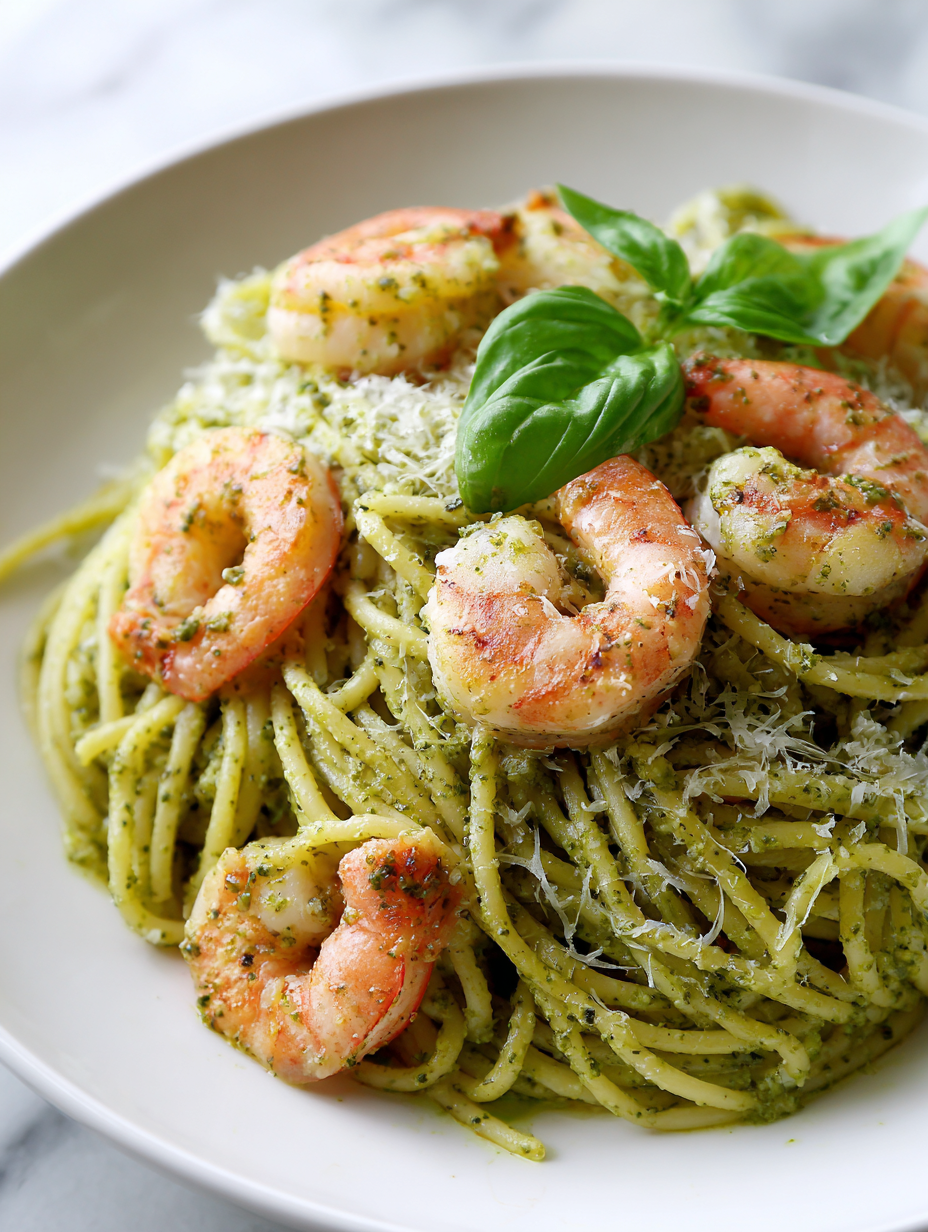
This Shrimp Pesto Pasta is a dish that came out of my cluttered fridge and a craving for something bright and fast. I love how the plump, tender shrimp meet the aromatic burst of basil and garlic in the pesto, all tangled up with al dente pasta. It’s one of those meals that feels indulgent but is surprisingly simple to throw together after a long day.
What makes this recipe special for me is its spontaneity—no fuss, just fresh ingredients and a little bit of love. I remember making it the night I got back from a trip, feeling tired but craving something familiar and satisfying. The aroma of garlic and basil wafting through the kitchen always pulls me back to that moment, reminding me that good food doesn’t have to be complicated.
This recipe is inspired by a childhood memory of my grandmother’s garden, where basil and shrimp seemed to grow together in a small, chaotic patch. It’s about capturing that wild, fresh feeling—using simple ingredients to create something that feels both rustic and special, like a secret shared over a busy kitchen table.
The unexpected joy of basil and shrimp
- This dish reminds me of summer evenings at my grandma’s place, where the smell of basil and garlic filled the air and everyone gathered around the table with smiles.
- I love how this recipe came together during a busy week—proof that fresh, vibrant flavors don’t need hours in the kitchen.
- There’s a quiet pride I feel when I toss the pasta and shrimp in that bright pesto—like I’ve captured a little bit of sunshine in my bowl.
- Making this dish always feels like a small act of rebellion against over-complicated meals—simple ingredients, honest flavors.
- It’s funny how a splash of lemon and a handful of basil can turn plain shrimp and pasta into something unexpectedly uplifting.
The story behind this recipe
- This dish was born out of a late-night fridge raid and an urgent need for something bright, quick, and satisfying. I remember the first time I tossed those ingredients together—shrimp still warm from the pan, fragrant basil pesto clinging to every strand of pasta. It felt like capturing a little bit of summer in the chaos of a busy weeknight.
- What I love about this recipe is how it transforms simple, everyday ingredients into something that feels a bit special—no fuss, just fresh flavors. Making it reminds me to keep things spontaneous and trust the beauty of straightforward cooking. It’s become my go-to when I want comfort without spending hours at the stove.
- heading
- story_type
Historical and Cultural Roots
- This dish is inspired by coastal Italian cooking, where fresh seafood and basil are staples, blending simplicity with vibrant flavor.
- Shrimp and pesto pairing became popular in the Mediterranean region during the 20th century, thanks to the abundance of seafood and basil.
- The combination of seafood and pesto reflects a centuries-old tradition of using fresh, local ingredients for quick, flavorful meals.
Ingredient breakdown
- Shrimp: I prefer deveined, peeled shrimp—quick to cook and tender with a slightly sweet briny aroma. If yours are small, cook a bit longer to get that perfect bounce.
- Basil Pesto: Fresh basil makes all the difference—bright, aromatic, with that oily, slightly peppery punch. If you’re out, a handful of arugula mixed with parsley can mimic its vibrancy.
- Pasta: I use linguine or spaghetti—something that holds onto the pesto well. For a gluten-free option, try rice noodles, but expect a softer bite.
- Garlic: I love lots of garlic—fragrant and slightly sweet when toasted. If you’re sensitive, reduce to one clove or sauté it gently until golden.
- Lemon: Brightens the dish with a zesty kick—squeeze it right before serving for that fresh, oozy burst. Skip if you prefer a milder flavor.
- Olive Oil: Use good-quality extra virgin—rich and fruity, it coats the pasta beautifully. If you want a lighter dish, cut back, but it won’t be as luscious.
- Parmesan: I add freshly grated parmesan for that salty, umami depth. For a dairy-free tweak, nutritional yeast can bring a similar savory note, but it’s less creamy.
Spotlight on key ingredients
Shrimp:
- I prefer deveined, peeled shrimp—quick to cook and tender with a slightly sweet briny aroma. If yours are small, cook a bit longer to get that perfect bounce.
- Basil Pesto: Fresh basil makes all the difference—bright, aromatic, with that oily, slightly peppery punch. If you’re out, a handful of arugula mixed with parsley can mimic its vibrancy.
Basil Pesto:
- The vibrant green color and fragrant aroma come alive when freshly made. It thickens slightly when heated, releasing a rich, oily scent that fills the kitchen.
- Shrimp: During cooking, they curl up and turn a bright pink with a firm, slightly bouncy texture—crucial signs they’re perfectly done.
Notes for ingredient swaps
- Seafood Swap: Crayfish or scallops can replace shrimp—both add a different, rich sweetness but need a slightly longer cook time.
- Dairy-Free: Use nutritional yeast instead of Parmesan for a cheesy flavor—less creamy, but still savory and umami-rich.
- Pesto Alternative: Swap basil pesto for sun-dried tomato pesto—adds a smoky, tangy depth, especially good in summer.
- Gluten-Free: Replace traditional pasta with chickpea or rice noodles—softer texture, but still satisfying and protein-rich.
- Vegetarian Twist: Omit shrimp, add sautéed zucchini or cherry tomatoes—brighten the dish with seasonal produce.
- Oil Choice: Use avocado or walnut oil instead of olive—different nutty notes, but equally good for cooking at high heat.
- Lemon: Substitute with lime or a splash of white wine vinegar—adjust acidity and brightness to taste.
Equipment & Tools
- Large skillet: For cooking shrimp and combining ingredients
- Large pot: Boiling pasta
- Tongs: Handling shrimp and pasta
- Measuring cup: Measuring pasta water and oil
- Grater: Finishing with Parmesan cheese
Step-by-step guide to Shrimp Pesto Pasta
- Gather your tools: a large skillet, a pot for boiling pasta, tongs, a spoon, and a measuring cup. The skillet is for shrimp, the pot for pasta, everything else for assembly.
- Bring a large pot of salted water to a rolling boil—aim for about 4 liters (a gallon). Add pasta, cook until al dente, about 8-10 minutes. Drain, but save a cup of pasta water.
- While pasta cooks, season the shrimp: sprinkle with salt, pepper, and a pinch of chili flakes if you like heat. Heat the skillet over medium-high, about 180°C (350°F).
- Add a splash (2 tbsp) of olive oil. When shimmering, toss in the shrimp. Cook for 2-3 minutes per side—shrimp should turn pink and opaque, with a slight curl. Remove from skillet and set aside.
- In the same skillet, add a bit more oil if needed. Toss in 2 minced garlic cloves. Sauté for about 30 seconds until fragrant—smell that sweet, nutty aroma. If garlic burns (blackened), reduce heat immediately.
- Lower heat to medium, add the cooked pasta to the skillet. Stir gently to coat in garlic-infused oil. Pour in about 1/4 cup of pasta water to loosen the sauce and create a silky texture.
- Stir in 3-4 tablespoons of fresh basil pesto—observe the vibrant green coating the pasta and shrimp. Taste and adjust seasoning, adding more pesto for richness or pasta water for looseness.
- Return the shrimp to the skillet. Toss everything together for 1-2 minutes, letting flavors meld. The shrimp should reheat, and the pasta should be glossy and fragrant.
- Finish with a squeeze of lemon—about 1 tablespoon—brightening the dish. Grate a little Parmesan over the top if desired. Serve immediately, garnished with extra basil if you like.
Serve immediately on warm plates, garnished with extra basil leaves and a lemon wedge. No resting needed, just enjoy the warm, fragrant bites right away.
How to Know It’s Done
- Shrimp turn pink and are opaque, with a slight bounce when pressed.
- Pasta is al dente—firm yet tender, with a slight resistance when bitten.
- Sauce is glossy and coats all ingredients evenly, with a fragrant basil aroma.
Shrimp Pesto Pasta
Ingredients
Equipment
Method
- Bring a large pot of salted water to a rolling boil. Add the pasta and cook until al dente, about 8-10 minutes. Drain, reserving a splash of pasta water, and set aside.
- While the pasta cooks, season your shrimp with a pinch of salt and pepper. Heat the skillet over medium-high heat and add the olive oil. Once shimmering, toss in the shrimp.
- Sauté the shrimp for about 2-3 minutes per side until they turn pink and opaque with a slight curl. Remove them from the skillet and set aside.
- In the same skillet, add the minced garlic and sauté gently over medium heat for about 30 seconds until fragrant and golden. Be careful not to burn it.
- Add the cooked pasta to the skillet and toss to coat in the garlic-infused oil. Pour in a splash of reserved pasta water to loosen the sauce and create a silky coating.
- Stir in the basil pesto, starting with 3 tablespoons, and toss everything together until evenly coated. Adjust with more pesto or pasta water if needed for consistency.
- Return the sautéed shrimp to the skillet and toss gently to combine. Let everything heat through for another minute or so.
- Squeeze fresh lemon juice over the pasta, then grate some Parmesan cheese on top. Toss once more for a bright, flavorful finish.
- Serve immediately on warm plates, garnished with extra basil if desired. Enjoy the fragrant, glossy pasta while hot!
Pro tips for perfect shrimp pesto pasta
- Bolded Mini-Head: Use high heat for shrimp → Sear quickly until pink and slightly charred for maximum flavor.
- Bolded Mini-Head: Reserve pasta water → Add a splash to loosen sauce and create a silky texture.
- Bolded Mini-Head: Don’t rush garlic → Sauté until fragrant, golden spots develop, but avoid burning to prevent bitterness.
- Bolded Mini-Head: Toss pasta promptly → Mix with pesto and shrimp immediately to keep everything hot and coated evenly.
- Bolded Mini-Head: Watch shrimp color → Turn pink and opaque—don’t overcook, or they’ll be tough and rubbery.
- Bolded Mini-Head: Taste as you go → Adjust pesto and lemon for brightness, balancing richness and acidity.
- Bolded Mini-Head: Use fresh basil pesto → It’s more fragrant and vibrant than store-bought, adding depth in each bite.
Common mistakes and how to fix them
- FORGOT to preheat the pan → Always heat the skillet thoroughly before adding shrimp.
- DUMPED all pesto at once → Add pesto gradually, tasting for balance and richness.
- OVER-TORCHED the garlic → Sauté garlic gently until fragrant, not browned or burnt.
- MISSED the pasta water reserve → Save pasta water to loosen sauce and enhance flavor.
Quick fixes and pantry swaps
- When sauce is too thick → Splash in hot pasta water to loosen and add sheen.
- If shrimp isn’t pink → Increase heat slightly and cook 30 seconds longer.
- DUMPED too much pesto → Add a little pasta water to dilute and balance flavors.
- Overcooked pasta → Rinse under cold water immediately to stop cooking and save texture.
- Splash oil on a smoky pan → Patch with a damp cloth to cool and prevent burning smell.
Prep, store, and reheat tips
- Prep the shrimp: Peel and devein ahead, keep refrigerated for up to 24 hours. The flesh stays firm and fresh.
- Make the pesto: Prepare or buy fresh basil pesto a day in advance. Store in an airtight container in the fridge for 2-3 days; aromas deepen overnight.
- Cook pasta: Boil until al dente, then rinse in cold water to stop cooking. Keep in a sealed container for up to 4 days; reheats well with moisture.
- Reheating: Gently warm pasta and shrimp in a skillet over low heat, adding a splash of water or olive oil. The aroma of garlic and basil should reignite and smell vibrant.
- Shelf life: Consume leftovers within 2 days for optimal freshness. The shrimp may lose some firmness, and pesto flavor could mellow, but still enjoyable.
Top questions about Shrimp Pesto Pasta
1. How do I know when the shrimp are perfectly cooked?
Fresh shrimp should be pink, firm, and slightly translucent before cooking. Overcooked shrimp turn rubbery and lose their bounce.
2. Can I use store-bought pesto instead of homemade?
Use a good-quality basil pesto for vibrant flavor and aroma. Store-bought works fine, but homemade tastes brighter and fresher.
3. How long should I cook the pasta?
Cook the pasta until just al dente, about 8-10 minutes. It should be tender but still have a slight bite.
4. Should I add all the pesto at once?
Add the pesto gradually and taste as you go. Too much pesto at once can overpower the dish.
5. How do I fix a thick or sticky sauce?
Use a splash of pasta water to loosen the sauce if it gets too thick or sticky. It helps create a silky coating.
6. When should I add the lemon juice?
Lemon juice brightens the dish and balances the richness of the pesto. Squeeze it right before serving for maximum freshness.
7. Can I substitute other seafood for shrimp?
You can substitute other seafood like scallops or crayfish, but cooking times may vary. Adjust accordingly to avoid overcooking.
8. Can I make this gluten-free?
If using gluten-free pasta, choose rice or chickpea noodles for a similar texture. Expect slightly softer bites but good flavor.
9. How do I reheat leftover pasta without ruining it?
Reheat leftovers gently in a skillet with a splash of water or oil. Avoid microwaving to prevent sogginess or dryness.
10. How do I avoid burning the garlic?
Over-torched garlic can turn bitter. Sauté gently over medium heat until fragrant, about 30 seconds to 1 minute.
This dish is one of those recipes that sneaks up on you—simple ingredients, but a flavor punch that sticks with you. The combination of fresh basil, tender shrimp, and bright lemon makes it perfect for any season, especially when basil is at its peak. It’s a reminder that sometimes, quick and unpolished can taste the most genuine.
In the end, it’s about those honest, unpretentious moments in the kitchen—throwing things together, tasting, adjusting, and feeling that sense of satisfaction when everything comes together just right. No fuss, no drama, just good food that’s easy to love and repeat.
Hi, I’m Jessica Miller, the creator behind Taste Bud Tyrant. Before you get intimidated by the name, let me explain. I am not actually tyrannical. I am just deeply opinionated about flavor. If a dish is bland, I will say it. If a sauce needs acid, I will add it. If something can be bolder, brighter, or better balanced, I will not stop until it is.
