
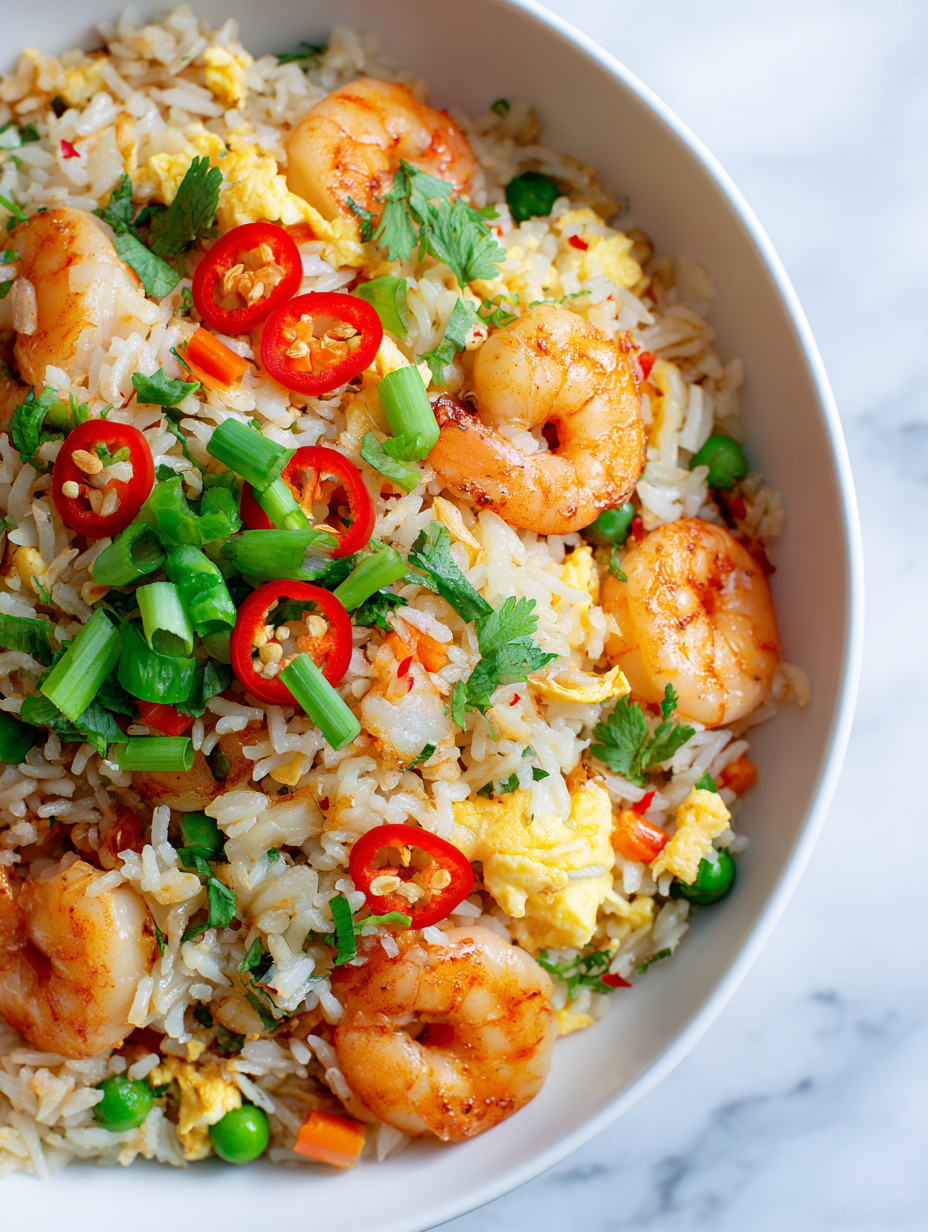
There’s something about the smell of a well-wok-tossed shrimp fried rice that instantly transports me back to busy street corners in Bangkok, where the smoky aroma mingles with the salty ocean scent of shrimp. I’ve always loved how simple ingredients—shrimp, rice, soy—can come together in that chaotic dance of heat and oil, creating a dish that feels both humble and celebratory.
This recipe isn’t about perfection, but about capturing that elusive balance between a smoky, slightly charred edge and tender, juicy shrimp. I’ve learned to chase that crackling sound when the rice hits the hot oil, knowing that’s when the magic begins. It’s a dish that’s forgiving enough to make on a weeknight, yet special enough to serve with a little extra garnish and a splash of lime.
Focusing on how to perfectly balance the smoky wok aroma with the tender shrimp and fluffy rice, making each bite evoke a nostalgic street-food vibe in your own kitchen.
Balancing Smoke and Juicy Shrimp
- That first bite always surprises me—juicy shrimp with the smoky rice, like a quick trip to a bustling street stall.
- Cooking this dish reminds me of lazy weekends with family, everyone gathered around the table, sharing stories over steaming bowls.
- There’s a strange comfort in the chaos of stir-frying—hot oil splatters, sizzling sounds, and the smell of garlic filling the air.
The Inspiration Behind This Dish
Growing up, my mom’s kitchen was filled with the rush of weekend mornings and the irresistible scent of shrimp frying in garlic. I remember watching her toss rice and shrimp in her cast-iron skillet, the sizzling sound blending into a comforting hum. That dish was always more than just dinner; it was a messy, joyful chaos that somehow brought everyone together. Now, every time I make this fried rice, I try to capture that imperfect, lively spirit she cooked with — a little messy, a little spontaneous, but always full of flavor.
Trivia and Cultural Roots
- Shrimp fried rice has roots in Cantonese cuisine, where quick stir-fries were essential for busy street vendors.
- The dish likely traveled from China to Southeast Asia, adapting with local ingredients and flavors along the way.
- In many Asian cultures, fried rice was a way to use leftover rice and bits of protein, turning scraps into a meal.
- The smoky aroma from a well-wok-tossed fried rice is a signature element that hints at high-heat cooking traditions.
- Today, shrimp fried rice is a beloved comfort food worldwide, with each family adding their own twist.
Key Ingredients Breakdown
- Shrimp: I prefer using deveined, tail-on shrimp for better flavor and presentation. You want them juicy and slightly firm, not rubbery. Try to buy fresh or frozen, but always pat dry before cooking to prevent spattering.
- Day-old rice: It’s the secret to non-clumpy fried rice. Fresh rice’s moisture makes it gummy. If you only have fresh, spread it out on a tray and let it dry for 15-20 minutes before cooking.
- Soy sauce: I use a mix of light and dark soy for depth. It’s salty, umami goodness. Adjust to your taste, but don’t go overboard—too much can make it overly salty and dark.
- Garlic and scallions: I like plenty of garlic—smells like heaven when it hits hot oil. Scallions add freshness and a slight crunch. Use fresh, not dried, for the best zing.
- Oil: I swear by a neutral oil with a high smoke point—peanut or canola. It lets you get that sizzling, smoky flavor without burning. Keep the heat high, around 200°C/400°F.
- Eggs: Lightly beaten eggs scramble quickly and add richness. I add them last, so they stay soft. If you prefer vegan, skip eggs or try tofu scramble for similar texture.
- Optional extras: A dash of sesame oil adds a toasty aroma, but use sparingly—it’s potent. A squeeze of lime at the end brightens everything up with a fresh citrus pop.
Spotlight on key ingredients
Shrimp:
- I prefer deveined, tail-on shrimp for flavor and presentation. They stay juicy and firm when cooked properly. Fresh or frozen works, just pat dry to prevent spattering.
- Day-old rice: It’s the backbone of non-clumpy fried rice. Fresh rice’s moisture makes it gummy. Spread out freshly cooked rice and let it dry for 15-20 minutes if you only have fresh.
Flavorings:
- Soy sauce: I mix light and dark soy for depth. It’s salty, umami, and adds that glossy finish. Adjust to taste, but avoid overdoing it to keep balance.
- Garlic and scallions: I use plenty of garlic—smells like heaven when it hits hot oil—and fresh scallions for brightness. Use fresh for the best aroma and crunch.
Notes for ingredient swaps
- Protein: Frozen shrimp works just fine—just thaw and pat dry. Fresh is brighter, but either way, avoid rubbery texture.
- Rice: Use jasmine or basmati for more aroma. If you only have long grain, just spread it out to dry overnight for fluffiness.
- Soy Sauce: Tamari is a gluten-free swap with a richer, less salty flavor. Coconut aminos add sweetness but can alter the savory punch.
- Oil: Avocado oil is a neutral, high-smoke alternative if peanut or canola isn’t available. Keep the heat high but watch for smoking.
- Eggs: Tofu scramble is a good vegan replacement—texture stays tender, but skip the richness of eggs. For a quick fix, omit eggs entirely.
- Scallions: Chives or leeks provide a similar fresh onion note. They’re milder but still add that bright, green pop.
- Additional flavor: A few drops of fish sauce or a splash of oyster sauce can deepen umami—use sparingly if you want to keep it vegetarian.
Equipment & Tools
- Wok or large skillet: For high-heat stir-frying and smoky flavor
- Spatula or wooden spoon: To toss and stir ingredients
- Cutting board and knife: Prep shrimp, garlic, and scallions
- Small bowl: Beat eggs
Step-by-step guide to shrimp fried rice
- Gather all ingredients: shrimp, day-old rice, soy sauces, garlic, scallions, eggs, oil. Have your wok or large skillet ready over high heat, around 200°C/400°F, with a spatula or wooden spoon nearby.
- Prep the shrimp: devein if needed, pat dry, and toss with a pinch of salt and pepper. Set aside. Mince garlic and chop scallions. Beat eggs lightly in a small bowl.
- Heat your pan: add 1-2 tbsp neutral oil, swirl to coat. When shimmering, add shrimp in a single layer. Cook for 1-2 minutes per side until pink and just firm. Remove and set aside.
- In the same pan, add a touch more oil if needed. Toss in garlic—smells garlicky and fragrant within 30 seconds. Do not burn; if garlic starts to brown too quickly, lower heat slightly.
- Add the rice: break up clumps and stir vigorously to coat with oil and garlic. Spread rice out in an even layer. Let it sit undisturbed for about 30 seconds, then stir again; this helps develop some smoky, slightly charred bits.
- Push rice to the sides of the pan, then pour beaten eggs into the center. Let sit for 10 seconds, then scramble gently. Once set, mix eggs into rice, incorporating evenly.
- Return shrimp to pan: add back the cooked shrimp, drizzle soy sauces (light and dark), and toss quickly. Fry for another 1-2 minutes, ensuring everything is heated through and coated with sauce. Check for a slightly glossy, caramelized appearance.
- Finish with chopped scallions, a squeeze of lime if desired, and a dash of sesame oil for aroma. Give everything one last stir to combine flavors.
- Transfer fried rice to a serving dish. Let rest for 2 minutes—resting slightly helps flavors settle. Serve hot, with extra scallions or lime on the side.
Serve immediately while hot. Garnish with extra scallions and a squeeze of lime if desired. Rest for 2 minutes to let flavors meld before digging in.
How to Know It’s Done
- Shrimp are pink, firm, and opaque.
- Rice has a slightly crispy, smoky bottom layer.
- Eggs are softly scrambled and evenly distributed.
Bangkok-Style Shrimp Fried Rice
Ingredients
Equipment
Method
- Start by preparing all your ingredients: devein the shrimp, mince the garlic, chop the scallions, and beat the eggs in a small bowl. Have your rice ready and all tools nearby.
- Heat your wok or large skillet over high heat until shimmering, then add 1-2 tablespoons of neutral oil. When it starts to smoke slightly, add the shrimp in a single layer, cooking for 1-2 minutes per side until they turn pink and are just firm. Remove the shrimp and set aside.
- In the same pan, add a little more oil if needed, then toss in the minced garlic. Stir constantly for about 30 seconds until fragrant and golden, filling the air with a garlicky aroma.
- Add the cold, dry rice to the pan, breaking up any clumps with your spatula. Spread it out evenly and let it sit undisturbed for about 30 seconds to develop some smoky, slightly charred bits, then stir vigorously to coat all grains with oil and garlic.
- Push the rice to the sides of the pan to create a well in the center. Pour the beaten eggs into this space, letting them sit for about 10 seconds before gently scrambling with your spatula. Once mostly set, fold the eggs into the rice evenly.
- Return the cooked shrimp to the pan, then drizzle the soy sauce over everything. Toss quickly to combine, ensuring the shrimp and rice are coated with the sauce and heated through, about 1-2 minutes.
- Finish by stirring in chopped scallions and a splash of sesame oil for extra aroma. Squeeze fresh lime juice over the top for brightness. Give everything a final stir to meld the flavors.
- Transfer the hot fried rice to a serving dish. Serve immediately while it’s still sizzling, with extra lime wedges or scallions on the side for added freshness.
Tips for Perfect Shrimp Fried Rice
- High heat: Always cook with your wok or skillet very hot—around 200°C/400°F—to develop that smoky, crispy edge.
- Dry rice: Use day-old rice or spread freshly cooked rice on a tray to dry for 15 minutes—gummy rice ruins the texture.
- Quick stir: Toss ingredients rapidly—shrimp, rice, eggs—to prevent sticking and ensure even cooking.
- Add soy last: Pour soy sauces in the final minutes—this prevents burning and keeps the sauce vibrant and glossy.
- Scramble eggs separately: Cook eggs in a small well in the pan, then mix—this keeps them tender and fluffy.
- Finish with scallions: Toss in chopped scallions right at the end—brighten the dish with a fresh, crisp bite.
- Taste before seasoning: Always check soy sauce levels before adding extra salt—it’s easy to overdo.
Common mistakes and how to fix them
- TOO MUCH SHRIMP: Overcrowd pan, lower heat to prevent steaming shrimp instead of searing.
- DUMPED RICE: Use cold, dry rice; if too fresh, dry in the fridge for 20 minutes first.
- OVER-TORCHED RICE: Stir constantly once rice hits high heat to prevent burning and uneven charring.
- SKIPPED SEASONING: Taste soy sauce before adding; adjust salt and add a splash of fish sauce if needed.
Quick Fixes and Pantry Swaps
- If rice clumps, splash a little water and toss to loosen the grains.
- When shrimp overcooks, remove immediately and add back later to prevent rubberiness.
- Splash soy sauce in the pan to rescue flavor if it tastes flat or bland.
- Patch burnt rice by removing the charred layer and adding a splash of broth to revive moisture.
- Shield delicate shrimp from strong heat by cooking in smaller batches to prevent overcooking.
Prep, store, and reheat tips
- Prepare cooked shrimp and rice ahead of time; store in airtight containers in the fridge for up to 2 days. The cold makes stir-frying quicker and helps prevent mushiness.
- Keep chopped scallions and minced garlic refrigerated in small containers. Use within 24 hours for maximum freshness and brightness.
- Reheat shrimp and rice in a hot skillet or wok, adding a splash of oil. The aroma and slightly crispy edges will re-emerge, reminding you of freshly cooked dish.
- Store leftover fried rice in the fridge for 1-2 days. Reheat thoroughly until hot and steaming, checking that rice is evenly warmed and fragrant.
- For best texture, add a tiny splash of oil or a squeeze of lime when reheating. This restores some of that freshly stir-fried aroma and prevents dryness.
Top questions about shrimp fried rice
1. Can I use frozen shrimp?
Use deveined, peeled shrimp that are fresh or properly frozen and dried. They should be juicy, not rubbery, and cook quickly, turning pink and opaque. Tail-on shrimp look nicer, but peeled works fine too.
2. Why is day-old rice recommended?
Day-old rice is best because it’s drier and less sticky, which helps prevent clumping. If you only have fresh rice, spread it out on a tray and let it dry for 15-20 minutes.
3. How do I adjust soy sauce for taste?
Soy sauce adds saltiness and umami. Using a mix of light and dark soy gives depth. If you want less salt, start with half and adjust. A splash of fish sauce or oyster sauce can boost flavor too.
4. How do I know when shrimp are cooked?
Cooking the shrimp over high heat until just pink and firm is key. Overcooking makes them rubbery. Remove them as soon as they turn pink to keep them tender.
5. What temperature should my pan be?
Make sure your pan or wok is very hot—around 200°C/400°F. This develops that smoky, slightly charred flavor and crispy texture that makes fried rice special.
6. When should I add the eggs?
Add the eggs last, scramble quickly in a well in the pan, then mix into the rice. This keeps them soft and fluffy, not rubbery.
7. How do I finish the dish properly?
Finish with chopped scallions and a squeeze of lime to brighten the dish. Serve immediately for that fresh, crispy texture.
8. How do I fix sticky rice?
If your rice sticks or clumps, splash a bit of water in the pan and toss gently. This loosens the grains without making everything soggy.
9. How should I reheat leftover fried rice?
Reheat fried rice in a hot skillet or wok with a little oil. This restores some of the crispy, smoky qualities and hot aroma. Stir well until steaming hot.
10. Can I make this vegetarian or vegan?
Skip the soy sauce or use a milder alternative if you prefer a lighter flavor. You can also add a splash of broth or lemon juice for brightness.
Making this shrimp fried rice is like capturing a busy street corner in a single skillet—chaotic, fragrant, and full of life. It’s a dish that’s rooted in memories and quick to whip up when you want that smoky, savory hit of comfort. Right now, it’s a reminder that simple ingredients, treated right, can turn into something special, even in a rushed weekday dinner. Each bite holds a little bit of nostalgia, a splash of chaos, and a whole lot of flavor to keep your evenings lively.
Even if the wok is a bit battered or the rice isn’t perfect, the joy is in the process—the sizzling, the smell, the quick tosses. It’s honest, it’s real, and it’s what keeps home cooking exciting, no matter how many times you make it. So, keep tossing, tasting, and adjusting—this dish is about finding your own balance between smoky, tender, and bright.
Hi, I’m Jessica Miller, the creator behind Taste Bud Tyrant. Before you get intimidated by the name, let me explain. I am not actually tyrannical. I am just deeply opinionated about flavor. If a dish is bland, I will say it. If a sauce needs acid, I will add it. If something can be bolder, brighter, or better balanced, I will not stop until it is.
