
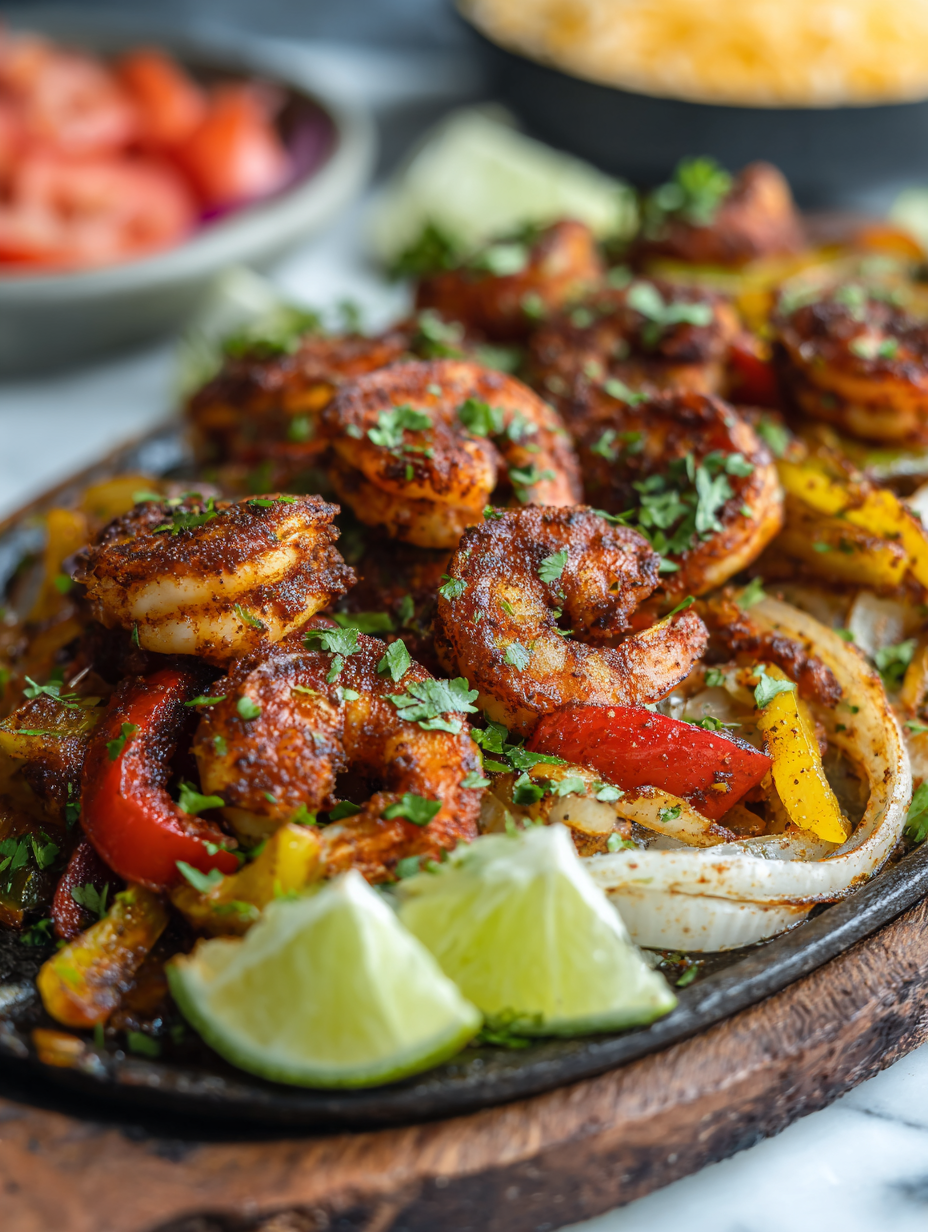
What really makes shrimp fajitas sing is that smoky, almost charred edge that a hot cast-iron skillet can deliver. It’s that deep, slightly bitter note that elevates the sweetness of the shrimp and peppers, turning a simple dish into something almost nostalgic, like a memory from a summer cookout. I love how the smell of sizzling spices and charred veg fills the kitchen, making everything feel a little more special, even on a busy weeknight.
This recipe is about embracing the imperfections—getting that perfect sear without overcooking the shrimp, balancing smoky flavor with bright citrus, and keeping everything tender and juicy. It’s a dance of heat, timing, and a handful of good ingredients. When I first started experimenting with this, I was surprised how just a few minutes of high heat could transform humble ingredients into a satisfying, almost crave-worthy meal.
Focusing on how the smoky char from a cast-iron skillet elevates the natural sweetness of shrimp and peppers, turning simple fajitas into a deeply satisfying, almost nostalgic comfort food.
The smoky charm of cast iron
- There’s something about the smell of smoky peppers that instantly transports me back to summer nights on the patio.
- I always feel a surge of pride when I get that perfect sear on the shrimp—crispy edges without overcooking.
- The chaos of juggling peppers, shrimp, and spices keeps me focused, but also makes the meal feel alive.
- It’s those small, charred bits that make each bite burst with flavor, reminding me why I love cooking over high heat.
- Every time I make this, I think about how simple ingredients can create such a complex, satisfying dish.
The story behind this recipe
- This recipe came together one hectic evening when I was experimenting with ways to make weeknight dinners feel a bit more special. I wanted something quick, smoky, and bursting with flavor—something that felt like a little celebration even on a busy Tuesday. The idea of using a cast-iron skillet to get that charred edge on the peppers and shrimp struck me as both satisfying and honest, nothing fancy but deeply flavorful.
- Every time I make these fajitas, I remember the first time I got that perfect sear—shrimp just turning tender, peppers slightly blackened but sweet. It’s a reminder that simple ingredients can truly shine when treated right, and that high heat is your best friend in the kitchen. The smoky aroma filling the air makes the whole house feel warmer, more inviting, even if it’s just a regular weeknight.
- Inspiration struck during a summer trip to Mexico, where I watched street vendors toss peppers and shrimp straight onto blazing grills, filling the air with that irresistible smoky scent. Ever since, I’ve been chasing that same flavor at home, tweaking spices and techniques until I found this balance of smoky, tender, and bright. It’s become my go-to for when I need a quick, satisfying meal with a little soul.
Fajitas’ Cultural and Culinary Roots
- Shrimp fajitas trace their roots to the vibrant street food culture of northern Mexico, where quick, smoky grilled dishes are a staple.
- The use of cast iron for fajitas became popular because it retains high heat, creating that signature char and smoky flavor that defines the dish.
- Fajitas as we know them gained international popularity in the 1980s, especially through Tex-Mex cuisine, blending Mexican ingredients with American BBQ influences.
- The name ‘fajita’ originally referred to skirt steak, but over time, it expanded to include shrimp and chicken, reflecting versatility and regional adaptations.
- The smoky char on peppers and shrimp is inspired by traditional open-flame grilling, a technique that enhances sweetness and adds depth with a slightly bitter edge.
Key ingredients and tips
- Shrimp: I love the sweet, briny scent of fresh shrimp as they turn pink and slightly firm—don’t overcook, or they’ll get rubbery. Swap for scallops if you want a milder, tender bite.
- Bell Peppers: Their smoky, charred edges add a burst of sweetness and color. Use red or yellow for vibrancy, but green peppers will give a slightly sharper bite.
- Onion: I prefer yellow onions—they caramelize beautifully and add depth. Red onions work too if you like a milder, slightly sharper flavor.
- Spices: A simple mix of cumin, smoked paprika, and chili powder gives that warm, smoky aroma. Feel free to add a pinch of cinnamon for a surprising sweetness, if you like.
- Lime Juice: Brightens everything with a citrus kick—squeeze fresh just before serving for maximum zing, or use lemon if you prefer a subtler tartness.
- Oil: I use a high-smoke-point oil like avocado or canola to get that intense sear. Olive oil works, but watch the heat to avoid smoking and bitterness.
- Tortillas: Warmed on a dry skillet until just puffed and slightly toasted—soft, warm, and perfect for wrapping up all that smoky goodness.
Spotlight on key ingredients
Shrimp:
- I love the sweet, briny scent of fresh shrimp as they turn pink and slightly firm—don’t overcook, or they’ll get rubbery. Swap for scallops if you want a milder, tender bite.
- Bell Peppers: Their smoky, charred edges add a burst of sweetness and color. Use red or yellow for vibrancy, but green peppers will give a slightly sharper bite.
Bell Peppers & Spices:
- Onion: I prefer yellow onions—they caramelize beautifully and add depth. Red onions work too if you like a milder, slightly sharper flavor.
- Spices: A simple mix of cumin, smoked paprika, and chili powder gives that warm, smoky aroma. Feel free to add a pinch of cinnamon for a surprising sweetness, if you like.
Notes for ingredient swaps
- Shrimp: I love the sweet, briny scent of fresh shrimp as they turn pink and slightly firm—don’t overcook, or they’ll get rubbery. Swap for scallops if you want a milder, tender bite.
- Bell Peppers: Their smoky, charred edges add a burst of sweetness and color. Use red or yellow for vibrancy, but green peppers will give a slightly sharper bite.
- Onion: I prefer yellow onions—they caramelize beautifully and add depth. Red onions work too if you like a milder, slightly sharper flavor.
- Spices: A simple mix of cumin, smoked paprika, and chili powder gives that warm, smoky aroma. Feel free to add a pinch of cinnamon for a surprising sweetness, if you like.
- Lime Juice: Brightens everything with a citrus kick—squeeze fresh just before serving for maximum zing, or use lemon if you prefer a subtler tartness.
- Oil: I use a high-smoke-point oil like avocado or canola to get that intense sear. Olive oil works, but watch the heat to avoid smoking and bitterness.
- Tortillas: Warmed on a dry skillet until just puffed and slightly toasted—soft, warm, and perfect for wrapping up all that smoky goodness.
Equipment & Tools
- Cast-iron skillet: Seals in high heat for smoky sear and char.
- Tongs: Flips shrimp and vegetables without breaking them.
- Small bowl: Mix spices for even distribution.
- Sharp knife & cutting board: Preps peppers, onion, and shrimp efficiently.
- Citrus juicer: Extract maximum lime juice with minimal fuss.
Step-by-step guide to shrimp fajitas
- Equipment & Tools: Gather a large cast-iron skillet for high heat searing; tongs for flipping; a small bowl for spice mix; a cutting board and sharp knife for prep; and a citrus juicer for lime juice.
- Prep the shrimp. Peel and devein about 1 pound of large shrimp. Pat dry with paper towels to remove excess moisture. Set aside.
- Slice the peppers and onion into thin strips. Aim for uniform thickness for even cooking. Keep separate for now.
- Mix the spices—1 tsp cumin, 1 tsp smoked paprika, 1/2 tsp chili powder, and a pinch of salt— in the small bowl. Set aside.
- Heat the skillet over high heat until shimmering, about 2 minutes at 220°C/430°F. Add 1-2 tbsp oil (avocado or canola).
- Add peppers and onion in a single layer. Sear without stirring for 2 minutes, then toss and cook for another 3-4 minutes until slightly charred and tender. Transfer to a plate.
- In the hot skillet, add a touch more oil if needed. Toss in the shrimp in a single layer. Cook for 2 minutes undisturbed until edges turn pink and slightly crispy.
- Flip the shrimp with tongs. Add spice mixture directly over the shrimp. Cook for another 1-2 minutes, until shrimp are opaque and firm, and spices are fragrant.
- Return the peppers and onions to the skillet. Toss everything together, cook for 30 seconds to meld flavors. Remove from heat.
- Squeeze fresh lime juice over the mixture. Give it a final toss. Check seasoning, adjust with salt or more lime if needed.
- Rest for 1-2 minutes. Warm tortillas on a dry skillet for 30 seconds until puffed and slightly toasted. Serve fajitas with tortillas, garnishes, and extra lime.
Serve immediately with warm tortillas, lime wedges, and optional garnishes. Rest for 1-2 minutes before serving for flavors to settle. Plate with vegetables on the bottom, shrimp on top, and squeeze fresh lime over everything.
How to Know It’s Done
- Shrimp are opaque with a slight bounce when pressed.
- Peppers and onions are charred at edges but still tender.
- Spices are fragrant, and the mixture has a smoky aroma with bright citrus notes.
Smoky Shrimp Fajitas
Ingredients
Equipment
Method
- Gather your cast-iron skillet, tongs, small bowl, sharp knife, and cutting board. Peel and devein the shrimp, then pat them dry to remove excess moisture. Slice the bell peppers and onion into thin, even strips for quick, uniform cooking.
- Mix the cumin, smoked paprika, chili powder, and a pinch of salt in the small bowl to create your spice blend. Set aside.
- Heat your cast-iron skillet over high heat until it’s shimmering hot—look for a slight haze and listen for a faint sizzle. Add a tablespoon of oil and swirl to coat the pan evenly.
- Add the sliced peppers and onion to the hot skillet. Let them sear without moving for about 2 minutes until they develop deep charred spots. Toss them around with tongs and cook for another 3-4 minutes until slightly softened and smoky at the edges. Transfer to a plate.
- In the same hot skillet, add a little more oil if needed. Place the shrimp in a single layer and cook undisturbed for about 2 minutes until the edges turn pink and crispy. Flip them with tongs and cook for another 1-2 minutes until just opaque and tender.
- Sprinkle the spice mixture over the shrimp while cooking, allowing the flavors to coat the seafood evenly. The shrimp should have a fragrant smoky aroma and a slight bounce when pressed.
- Return the charred peppers and onions to the skillet with the shrimp. Toss everything together gently to combine and heat through for about 30 seconds. Remove from heat.
- Squeeze fresh lime juice over the mixture, giving everything a bright, citrusy boost. Toss again gently to distribute the flavor evenly.
- While the mixture rests for a moment, warm the tortillas on a dry skillet over medium heat until just puffed and slightly toasted, about 30 seconds per side.
- Serve the smoky shrimp and peppers hot, spooned onto warm tortillas. Garnish with extra lime or your favorite toppings if desired. Enjoy the vibrant, charred flavors with each bite.
Notes
Pro tips for smoky fajitas
- sear: Ensure your skillet is very hot before adding shrimp or peppers to get that caramelized edge and smoky flavor.
- spice: Toast your spices briefly in the hot pan before adding other ingredients to deepen their aroma and flavor.
- oil: Use a high-smoke-point oil like avocado for maximum searing without bitterness or smoking out the kitchen.
- timing: Toss the peppers and onions in the pan without stirring initially to develop a good char, then stir for even cooking.
- quickness: Shrimp cooks fast—about 2 minutes per side—so stay attentive and don’t overcook to keep them tender.
- lime: Squeeze lime juice just before serving to preserve bright, fresh flavor that lifts the smoky notes.
- resting: Let the finished fajitas sit for a minute after cooking; this helps the flavors meld and keeps everything juicy.
Common mistakes and how to fix them
- FORGOT to adjust heat → Shrimp overcooked or rubbery. Keep heat high and watch closely.
- DUMPED ingredients too early → Vegetables won’t char properly. Sear undisturbed for 2 minutes first.
- OVER-TORCHED peppers → Burnt flavor dominates. Keep a close eye after 2 minutes, adjust heat if needed.
- MISSED lime juice step → Brightness is lost. Squeeze fresh lime right before serving for best flavor.
Quick fixes and pantry swaps
- When shrimp curl tightly, they are overcooked—rescue with a quick splash of lemon juice and serve immediately.
- If peppers are too tender, toss in a bit of fresh lemon juice to brighten and add crunch back.
- Splash a little water into a hot pan to calm smoking and shimmer, then quickly wipe clean if burnt bits stick.
- Patch a dried-out fajita by adding a few drops of lime juice and a pinch of salt before serving.
- Shield delicate shrimp from over-torching by removing the skillet from heat as soon as they turn opaque.
Prep, store, and reheat tips
- Prep the shrimp: Peel and devein up to a day in advance. Keep refrigerated in an airtight container; they’ll stay fresh for 24 hours and remain juicy when cooked.
- Slice peppers and onions ahead: Store in an airtight container for up to 2 days. Keep them slightly crisp—if they soften too much, they’ll lose their smoky snap when cooked.
- Spice mix: Make and store your spice blend in a small jar or container. It keeps for several weeks in a cool, dark spot, ready to boost flavor instantly.
- Refrigerate leftovers: Fajita leftovers can last up to 2 days. Reheat gently in a skillet or microwave, checking for warmth and a slight sizzle, but avoid overcooking to keep the shrimp tender.
- Reheating aroma: Expect a smoky, spicy scent when reheating. The peppers may soften further, and the shrimp might lose a bit of their initial crispness, but flavor remains vibrant.
Top questions about shrimp fajitas
1. How do I know when shrimp are cooked?
Fresh shrimp turn pink and firm within 2-3 minutes of cooking. Overcooking makes them rubbery, so keep a close eye.
2. What texture should cooked shrimp have?
Look for a vibrant orange-pink color, a slight curl, and a firm texture when pressed gently.
3. Can I use different peppers?
Use colorful bell peppers and yellow onions for the best smoky flavor and visual appeal. Green peppers add a sharper bite.
4. How hot should my pan be?
High heat is key to a good sear. Use a cast-iron skillet heated until shimmering at around 430°F (220°C).
5. When should I add lime juice?
Squeeze fresh lime juice over the cooked fajitas for brightness. It’s best added right before serving.
6. Can I swap shrimp for other seafood?
Yes, you can substitute scallops for shrimp, but keep in mind they cook faster and are more delicate.
7. What spices are essential?
Using smoked paprika adds a deep smoky aroma that’s essential. Regular paprika can work but won’t be as intense.
8. How do I warm tortillas?
Warm tortillas quickly on a dry skillet until puffed and slightly toasted, about 30 seconds per side.
9. What if my peppers burn?
Over-torched peppers develop a bitter flavor. Keep an eye after 2 minutes to prevent burning.
10. How should I reheat fajitas?
Reheat leftovers gently in a skillet or microwave, checking for even warmth and maintaining juiciness.
This dish captures that smoky, charred essence that makes fajitas so crave-worthy, especially when cooked over high heat. It’s a reminder that simple ingredients, treated with care, can turn into something memorable, even on a rushed weeknight.
Whenever I make these fajitas, I think about how a little smoky aroma, bright lime, and tender shrimp come together in an honest, satisfying way. It’s a dish that feels both rustic and vibrant, perfect for those nights when you want something flavorful without fuss.
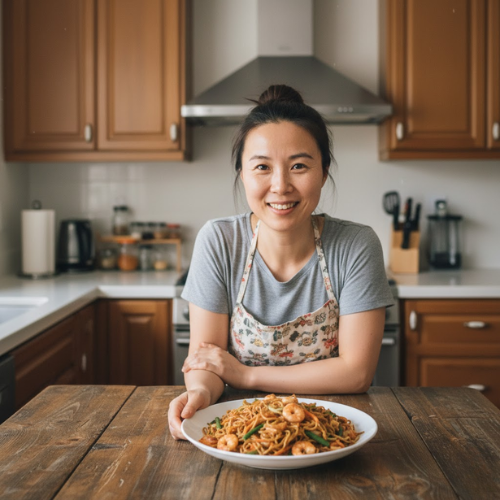
Hi, I’m Jessica Miller, the creator behind Taste Bud Tyrant. Before you get intimidated by the name, let me explain. I am not actually tyrannical. I am just deeply opinionated about flavor. If a dish is bland, I will say it. If a sauce needs acid, I will add it. If something can be bolder, brighter, or better balanced, I will not stop until it is.
