
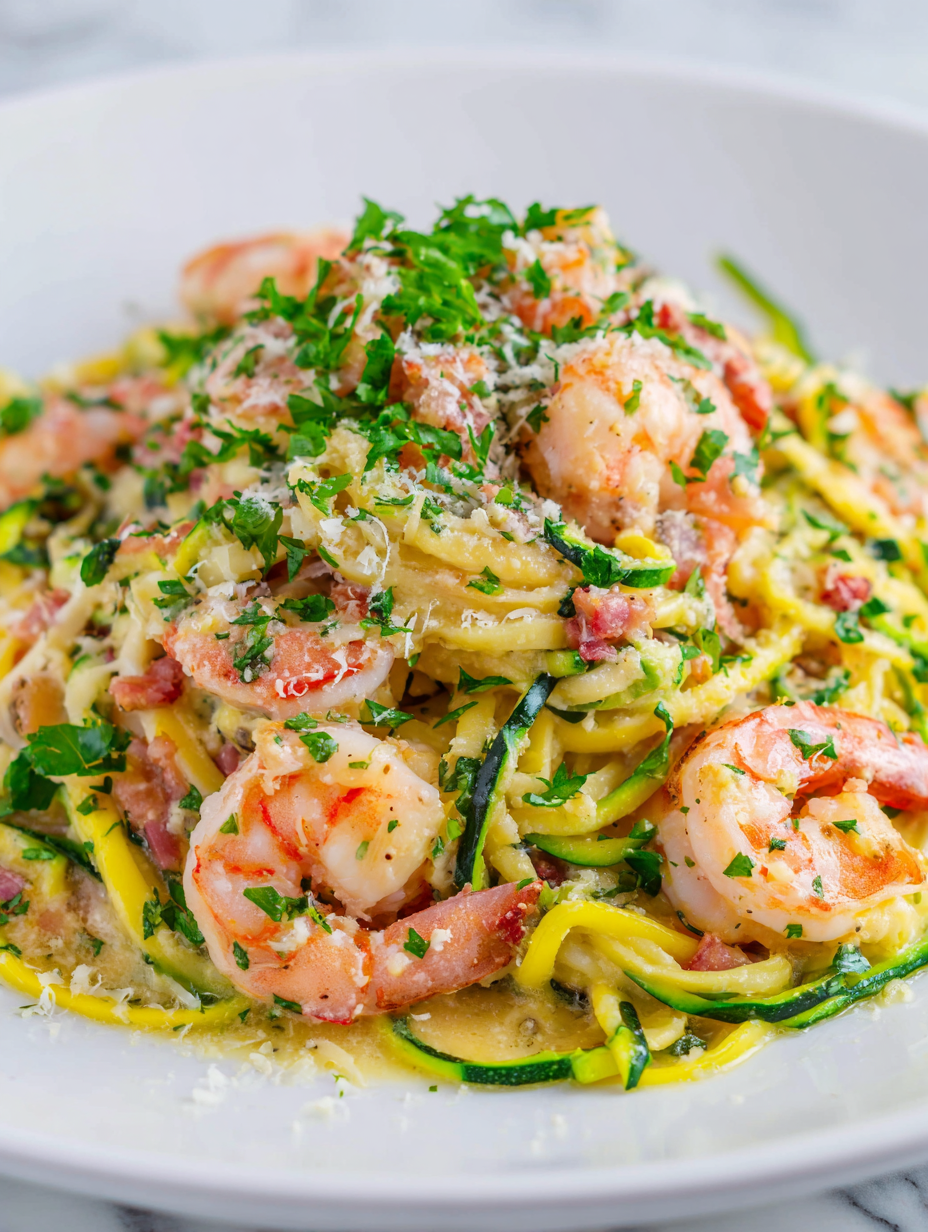
Switching out traditional pasta for spiralized zucchini in this shrimp carbonara keeps it light without losing that creamy, smoky flavor punch. It’s a playful twist for when you want comfort but with a bit of freshness on the plate.
This recipe came from a moment of kitchen chaos—trying to use up a glut of zucchini and some leftover shrimp. Turns out, the combo hits just right, blending the rich, cheesy sauce with the bright crunch of veggie noodles. It’s a dish that feels like a little rebellion against heavy carbs.
Honestly, I love how quick this comes together—a real weeknight hero. The zucchini softens just enough to absorb that luscious sauce, but still has a satisfying bite. It’s simple, honest, and perfect for those nights when you want something comforting but not weighed down.
Transforming classic Italian comfort food by swapping traditional pasta for spiralized zucchini, making this shrimp carbonara a light, veggie-forward dish that still hits all the creamy, smoky notes.
A Twist on Italian Comfort
- I love how the shrimp caramelizes just right, giving a smoky sweetness that really elevates the dish.
- There’s a nostalgic rush—this reminds me of late summer evenings at my family’s table, sharing simple, good food.
- The first time I made this, I felt a small victory—like I cracked a secret to making pasta night special with fewer ingredients.
The inspiration behind this dish
- This dish was born out of a quiet craving for something familiar yet different—a way to use up leftover shrimp and a stray zucchini in the fridge. I wanted the creamy comfort of carbonara but with a little twist, something quick and honest, no fuss.
- One evening, I threw everything into the pan without overthinking it—shrimp, zucchini noodles, a splash of pasta water, and a handful of Pecorino. The smell of that smoky shrimp mingling with the cheesy sauce, soft zucchini, and a hint of lemon brightened my whole mood. It’s a reminder that simple ingredients can surprise you.
- Now, I keep this recipe close for busy nights. It’s honest, imperfect, and totally adaptable—perfect for when you want something satisfying without the heaviness. Turning humble leftovers into a dish that feels special—that’s what I love about it.
Trivia and Origins of Shrimp Carbonara
- This twist on carbonara is inspired by the trend of lighter, vegetable-based pasta alternatives gaining popularity in Italy and beyond.
- Shrimp carbonara as a concept probably emerged from creative home cooks experimenting with seafood and the creamy, smoky flavors of classic Italian sauces.
- Historically, traditional carbonara uses pancetta and Pecorino Romano, but seafood versions like this highlight coastal culinary influences.
- The use of zucchini noodles in this dish reflects a modern desire to make comfort food more seasonal and veggie-forward, blending old and new.
Key ingredients and tweak tips
- Shrimp: I love how they turn tender and slightly caramelized, adding smoky sweetness that really stands out; try to buy fresh, wild-caught if you can, and don’t overcook—juicy and firm is the goal.
- Pancetta or bacon: I prefer it crispy and bits of it melt into the sauce, adding a savory, smoky punch; if you want a leaner version, skip the fatty bits and use prosciutto for a milder flavor.
- Eggs: I use whole eggs plus yolks for richness—whisk well to prevent scrambling; if you’re worried about raw eggs, temper with hot pasta water, but it’s all about that silky, glossy finish.
- Pecorino Romano: I love the sharp, salty tang—add it off the heat to avoid clumping; if you don’t have Pecorino, Parmesan works, but it’s less punchy and a tad mellower.
- Zucchini noodles: I like them spiralized fresh for crunch, but if they’re watery, salt and let sit for 10 minutes, then squeeze out excess moisture; they absorb flavors beautifully and add a fresh note.
- Lemon: I zest and add a squeeze at the end—brightens everything up with a zing that cuts through the richness; skip if you prefer a more subdued flavor, but it’s a quick lift.
- Black pepper: Freshly cracked is essential—smell that sharp aroma as you grind; don’t overdo it, but a generous crack adds just the right kick to balance the dish.
Key Ingredients and Their Quirks
Shrimp:
- I love how they turn tender and slightly caramelized, adding smoky sweetness that really stands out; try to buy fresh, wild-caught if you can, and don’t overcook—juicy and firm is the goal.
- Pancetta or bacon: I prefer it crispy and bits of it melt into the sauce, adding a savory, smoky punch; if you want a leaner version, skip the fatty bits and use prosciutto for a milder flavor.
Zucchini Noodles:
- Pecorino Romano: I love the sharp, salty tang—add it off the heat to avoid clumping; if you don’t have Pecorino, Parmesan works, but it’s less punchy and a tad mellower.
- I like them spiralized fresh for crunch, but if they’re watery, salt and let sit for 10 minutes, then squeeze out excess moisture; they absorb flavors beautifully and add a fresh note.
Notes for ingredient swaps
- Dairy-Free: Swap Pecorino Romano for a nut-based cheese or nutritional yeast. It won’t have that sharp, salty punch but still adds umami.
- Gluten-Free: Use gluten-free pasta or zucchini noodles exclusively. The texture might change slightly, but flavor stays intact.
- Vegetarian: Omit shrimp and add sautéed mushrooms or smoked tofu for umami. Keep the smoky flavor with smoked paprika or liquid smoke.
- Lemon Alternatives: Lime zest and juice give a similar bright, tangy note. Or skip citrus for a more subdued, creamy profile.
- Pancetta Sub: Use smoked salmon or prosciutto if you want a different salty, smoky kick. Adjust salt accordingly since these are saltier.
- Eggs: For vegan, try silken tofu blended with nutritional yeast and a splash of plant-based milk. It’s not as glossy but still creamy.
- Zucchini Noodles: Soba noodles or rice noodles work if you’re not veggie-focused. They absorb flavors differently but are just as quick.
Equipment & Tools
- Large pot: To boil zucchini noodles quickly and efficiently.
- Spiralizer: To create fresh zucchini noodles with a satisfying bite.
- Large skillet: To cook shrimp, pancetta, and combine all ingredients.
- Tongs: To toss noodles and handle shrimp without breaking them.
- Whisk: To blend eggs, cheese, and lemon zest smoothly.
- Measuring cups/spoons: To keep ingredients precise, especially cheese and seasoning.
Step-by-step guide to shrimp carbonara
- Gather all ingredients and equipment. Have your spiralizer, large skillet, tongs, and mixing bowls ready.
- Bring a large pot of salted water to a boil—around 100°C (212°F). Add zucchini noodles and cook for 1-2 minutes until just tender but still crisp. Drain and set aside.
- While water heats, peel and devein shrimp if necessary. Pat dry with paper towels. Season lightly with salt and pepper.
- Heat a tablespoon of olive oil in a large skillet over medium-high heat—about 180°C (356°F). Add shrimp and cook for 2-3 minutes per side, until they turn pink and slightly caramelized. Remove and set aside.
- In the same skillet, add chopped pancetta or bacon. Cook until crisp, about 4-5 minutes, stirring occasionally. If using, add garlic and cook for 30 seconds until fragrant.
- Reduce heat to medium. Add cooked zucchini noodles to the skillet, tossing to coat in the rendered fat and pancetta. Let them warm up for 1 minute.
- In a small bowl, whisk together eggs, grated Pecorino Romano, and lemon zest. Keep handy.
- Push zucchini and pancetta aside slightly. Pour egg mixture into the pan, off heat or very low heat. Toss quickly to coat noodles evenly, creating a creamy sauce—about 30 seconds. If the sauce seems too thick, add a splash of reserved pasta water to loosen.
- Return shrimp to the skillet, gently mixing everything. Taste and adjust seasoning with salt, pepper, or lemon juice if needed.
- Plate immediately, garnishing with extra Pecorino and cracked black pepper. Rest for a minute before serving to allow flavors to meld.
Serve immediately, garnished with extra Pecorino and black pepper. Rest for a minute to let flavors settle before digging in. Drizzle with a touch of olive oil if desired for added shine and richness.
How to Know It’s Done
- Shrimp are pink, opaque, and caramelized on edges.
- Zucchini noodles are tender but still firm, with a slight sheen.
- Egg mixture is creamy and coats the noodles without scrambling.
Shrimp Carbonara with Zucchini Noodles
Ingredients
Equipment
Method
- Bring a large pot of salted water to a boil. Add spiralized zucchini noodles and cook for 1-2 minutes until just tender but still crisp. Drain well and set aside.
- Peel and devein the shrimp if needed, then pat dry. Season lightly with salt and pepper.
- Heat olive oil in a large skillet over medium-high heat. Add shrimp and cook for about 2-3 minutes per side until pink and slightly caramelized, then remove from the pan and set aside.
- Add diced pancetta or bacon to the same skillet and cook until crispy, about 4-5 minutes. Add minced garlic and cook for 30 seconds until fragrant.
- Add the drained zucchini noodles to the skillet, tossing to coat in the rendered fat and pancetta. Warm for about 1 minute, letting the noodles absorb some flavor.
- In a small bowl, whisk together eggs, grated Pecorino Romano, lemon zest, and lemon juice until smooth and glossy.
- Reduce heat to low and pour the egg mixture over the zucchini noodles, quickly tossing to coat evenly. The sauce should thicken into a silky, creamy consistency—add a splash of reserved pasta water if it feels too thick.
- Return the cooked shrimp to the skillet and gently toss everything together to combine. Taste and adjust seasoning with more salt, pepper, or lemon if desired.
- Transfer to plates immediately, garnishing with extra Pecorino and freshly cracked black pepper. Serve hot, enjoying the vibrant aroma and glossy appearance.
Pro Tips for Shrimp Carbonara
- Start with a hot pan to get a quick sear on the shrimp, locking in juices and flavor.
- Salt zucchini noodles lightly after spiralizing and let sit for 10 minutes to draw out excess moisture.
- Use freshly cracked black pepper and add it at the end for a sharp, fragrant kick that enhances the smoky notes.
- Whisk eggs and cheese off heat to prevent scrambling—aim for a silky, glossy sauce that coats the noodles.
- Reserve pasta water before draining—it’s your secret weapon for adjusting sauce consistency and adding richness.
- Keep heat low when tossing eggs with noodles—this gentle touch keeps the sauce creamy and prevents curdling.
- Add a squeeze of lemon at the end to brighten the dish with a fresh, zingy contrast to the smoky, cheesy flavors.
Common Shrimp Carbonara Mistakes & Fixes
- FORGOT to adjust heat after adding eggs → Keep heat low to prevent scrambling.
- DUMPED pasta water too quickly → Save some for adjusting sauce consistency.
- OVER-TORCHED shrimp → Cook just until pink and opaque, don’t let them curl too tight.
- MISSED seasoning at the end → Taste and adjust salt or lemon juice before serving.
Quick fixes and pantry swaps
- When sauce looks too thick, splash in hot pasta water to loosen it.
- If shrimp aren’t pink and firm, overcooked—rescue with a quick ice bath to halt cooking.
- Splash lemon juice over finished dish for brightness if flavors feel dull.
- Patch watery zucchini noodles by salting and squeezing out excess moisture before cooking.
- Shield from over-torching by lowering heat immediately if the shrimp start to burn or smell smoky.
Prep, store, and reheat tips
- Prepare the zucchini noodles ahead by spiralizing and salting them; store in an airtight container in the fridge for up to 24 hours, they stay crisp and absorb flavors well.
- Peel and devein shrimp in advance; keep covered in the fridge and use within 1-2 days for optimal freshness and flavor.
- Cook the pancetta or bacon early; refrigerate in a sealed container and crisp it up again in the pan just before adding to the dish.
- Whisk the eggs with Pecorino Romano and lemon zest ahead, then keep chilled; this makes assembly quicker and keeps the sauce smooth.
- Refrigerate leftovers in an airtight container for up to 2 days; reheat gently over low heat, adding a splash of water to revive creaminess, watching for bubbling and smell of cooked eggs.
Top questions about Shrimp Carbonara
1. How do I get tender, caramelized shrimp?
Use fresh, wild-caught shrimp if possible. They turn tender and caramelized, adding smoky sweetness. Squeeze out excess moisture for a juicier bite.
2. When should I add lemon for the best flavor?
Add lemon zest and juice at the end. It brightens the dish with a zing that cuts through the smoky, cheesy richness.
3. How long should zucchini noodles cook?
Cook zucchini noodles quickly—about 1-2 minutes in boiling water—just until tender but still crisp. Drain well to prevent sogginess.
4. How do I avoid scrambling the eggs?
Keep the heat low when tossing eggs with noodles. This prevents scrambling and keeps the sauce silky and glossy.
5. Why reserve pasta water?
Reserve some pasta water before draining. Use it to loosen the sauce if it gets too thick, adding richness and helping it coat the noodles.
6. When should I add black pepper?
Use freshly cracked black pepper for a sharp, fragrant kick. Add it at the end to enhance smoky and cheesy flavors.
7. Can I make this dairy-free?
For a dairy-free version, swap Pecorino Romano for nutritional yeast or a nut-based cheese. It won’t be as sharp but still adds umami.
8. How do I prevent zucchini from being watery?
If zucchini noodles are watery, salt and let sit for 10 minutes, then squeeze out excess moisture before cooking.
9. How do I cook shrimp perfectly?
Use a hot pan to sear shrimp quickly—about 2-3 minutes per side—until they turn pink and slightly caramelized.
10. When is the best time to serve?
Serve immediately after tossing everything together. Rest for a minute so flavors meld, then enjoy the creamy, smoky bite.
This dish is a reminder that simple ingredients, when treated with care, can create something truly satisfying. The smoky shrimp and bright lemon make it perfect for a quick weeknight meal that still feels special.
No matter how hectic the day, a plate of this shrimp carbonara can bring a moment of honest comfort. It’s a small, humble reminder that good food doesn’t have to be complicated to be memorable.
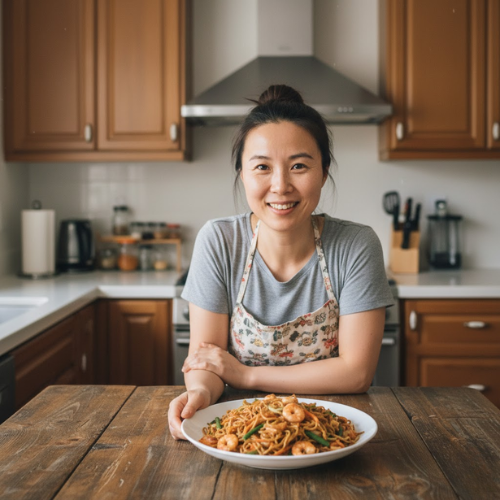
Hi, I’m Jessica Miller, the creator behind Taste Bud Tyrant. Before you get intimidated by the name, let me explain. I am not actually tyrannical. I am just deeply opinionated about flavor. If a dish is bland, I will say it. If a sauce needs acid, I will add it. If something can be bolder, brighter, or better balanced, I will not stop until it is.
