
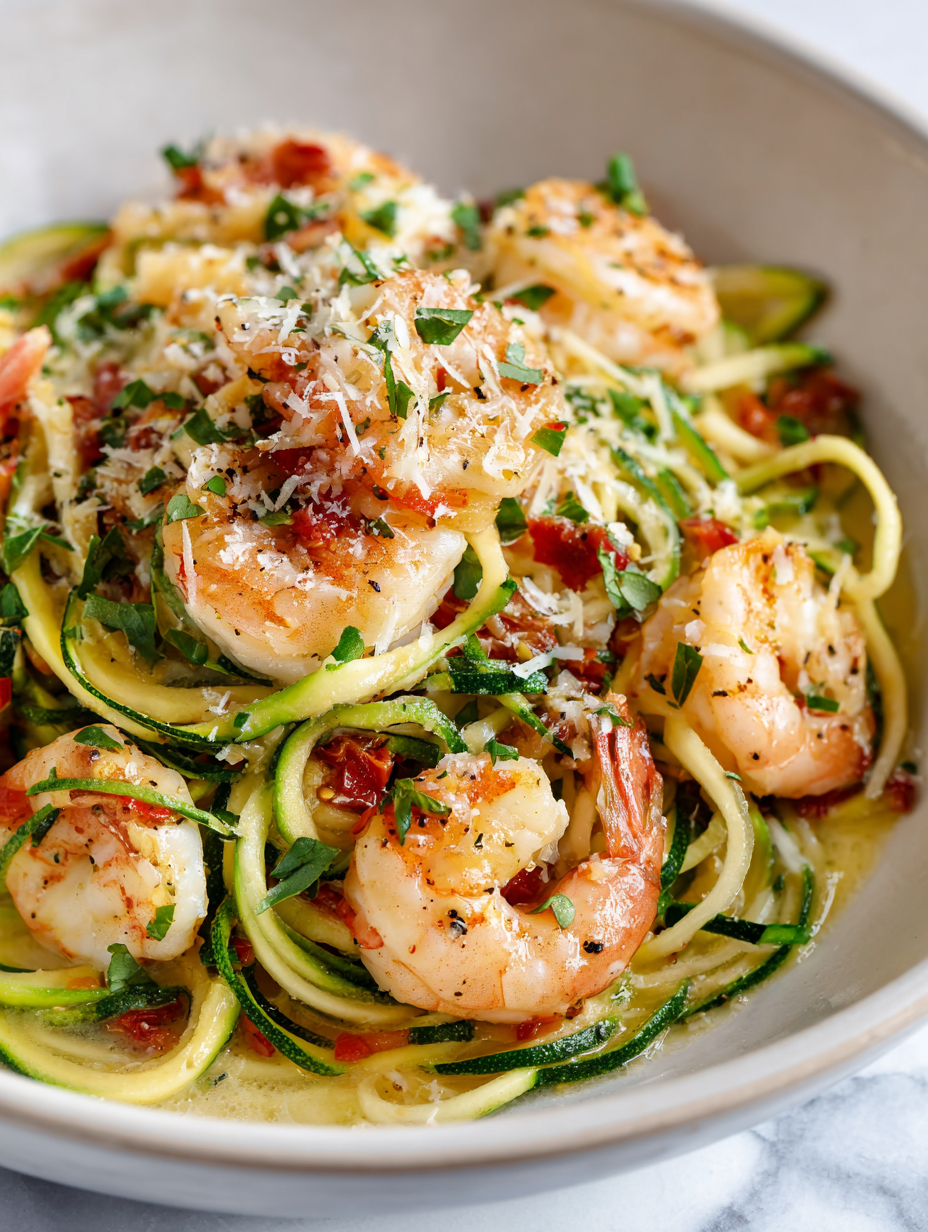
Zucchini is often dismissed as a summer veggie, but when you treat it as a blank canvas, it becomes something entirely different. This dish transforms zucchini into a pasta-like vehicle that soaks up garlic, lemon, and those sweet, briny shrimp. It’s like sneaking a vegetable into comfort food without anyone noticing—until they taste it and realize how fresh and vibrant it is.
I love how this recipe balances simplicity with a punch of flavor. It’s a quick weeknight dinner that feels indulgent but is really just a handful of ingredients, cooked fast enough to keep everything bright and juicy. Plus, the zucchini’s tender, slightly crisp texture mimics pasta in a way that’s surprisingly satisfying—no carb guilt, just pure, veggie-forward goodness.
Sometimes I want a dish that surprises me, that makes me rethink what a vegetable can do. Zucchini, with its mild, almost neutral flavor, readily absorbs garlic and lemon zest, turning into a flavorful sponge. When the shrimp are perfectly seared, and the zucchini retains a little crunch, it’s a harmony of textures and tastes that keeps me coming back for more.
Focusing on how this dish uses zucchini as a blank canvas, highlighting its ability to absorb flavors and mimic pasta textures, making it a surprising, vegetable-forward alternative for those craving comfort food with a twist.
Zucchini as a pasta canvas
- Cooking this dish reminds me how a simple veggie can become a standout star, sparking both pride and surprise.
- There’s a nostalgic rush in the smell of garlic and lemon filling the kitchen, taking me back to family dinners around a crowded table.
- I love how quickly this comes together—it’s my go-to when the week feels too busy for anything complicated.
- Sharing this with friends always sparks conversations about how zucchini can mimic pasta so convincingly, which makes me feel clever and a little smug.
The story behind this recipe
- This recipe sprouted from a lazy afternoon of rummaging through the fridge and realizing I had a bunch of tiny shrimp and zucchini that needed using up. Instead of tossing them into separate dishes, I wanted something that brought them together in a flavorful way—kind of a sneaky upgrade to a regular pasta night. The idea of turning zucchini into a pasta stand-in felt like a small act of culinary rebellion, especially when it worked out so well.
- I remember the first time I seared shrimp until they turned that perfect pink, the smell of garlic filling the kitchen, and slicing zucchini so thin it shimmered like ribbons. That moment of simple joy—knowing I’d created something fresh, bright, and totally satisfying from just a handful of ingredients—stuck with me. It’s become my go-to for busy weeknights, a dish that’s quick but feels like a little treat.
- heading: The story behind this recipe
Trivia and origins of zucchini pasta
- This dish draws inspiration from Italian zucchini ‘pasta’ dishes that gained popularity as low-carb options in the early 2000s, blending traditional techniques with vegetable-forward innovation.
- Zucchini as a noodle substitute became a staple in paleo and keto diets, turning humble summer squash into a versatile, guilt-free comfort food.
- Using shrimp adds a touch of coastal freshness, reminiscent of Mediterranean seafood pasta, but with a modern, vegetable-centric twist that feels both casual and elegant.
Key ingredients and tips
- Shrimp: I prefer the small, sweet ones—peel and devein for the best tenderness. Their briny aroma when seared really pops in the dish.
- Zucchini: Thinly sliced so it mimics pasta, but watch out—if it’s too thick, it won’t absorb flavors well. A spiralizer or julienne peeler helps here.
- Garlic: Use fresh cloves, crushed until fragrant—like a punch of warm, nutty aroma that fills the kitchen instantly. Skip pre-minced to keep it lively.
- Lemon: Brightens everything with a zesty punch. I zest before juicing to avoid the bitter pith—then add juice at the end for freshness.
- Olive oil: I go for a good extra-virgin, fruity and slightly peppery. It’s the base for searing shrimp and sautéing zucchini—use enough to coat well but not drown.
- Red pepper flakes: Just a pinch adds a warming kick. Sizzle them briefly in oil to release their smoky, spicy aroma without overpowering.
- Parmesan: Freshly grated, melty and nutty. Adds a salty, umami finish that makes this dish feel more indulgent—if you skip it, go for a sprinkle of toasted breadcrumbs.
Spotlight on key ingredients
Shrimp:
- I prefer the small, sweet ones—peel and devein for the best tenderness. Their briny aroma when seared really pops in the dish.
- Zucchini: Thinly sliced so it mimics pasta, but watch out—if it’s too thick, it won’t absorb flavors well. A spiralizer or julienne peeler helps here.
Zucchini:
- Its mild, almost neutral flavor makes it a perfect blank canvas. When cooked just right, it’s tender yet still slightly crisp, mimicking pasta in texture.
- During cooking, it releases a subtle, fresh aroma that blends seamlessly with garlic and lemon, amplifying the dish’s brightness.
Notes for ingredient swaps
- Seafood Swap: Use scallops or firm white fish instead of shrimp for a milder, sweet flavor. Adjust cooking time accordingly.
- Vegetable Swap: Swap zucchini with summer squash or cucumber for a different texture and slightly sweeter taste.
- Gluten-Free: Use gluten-free pasta or rice noodles if you need to avoid wheat-based options without sacrificing texture.
- Vegan Version: Replace shrimp with marinated tofu or tempeh, and skip cheese for a plant-based take that still delivers on flavor.
- Oil Alternatives: Avocado or sesame oil can add a different aroma and richness, but reduce quantity to avoid overpowering the dish.
- Citrus Swap: Lemon can be replaced with lime or orange zest for a different bright, tangy note that still refreshes the dish.
- Cheese Options: If Parmesan isn’t available, nutritional yeast or a sprinkle of chopped herbs can add savory depth without dairy.
Equipment & Tools
- Large skillet: For searing shrimp and sautéing zucchini.
- Spiralizer or julienne peeler: To create noodle-like zucchini strips.
- Mixing bowl: To salt and drain zucchini.
- Slotted spoon: To remove cooked shrimp without excess oil.
Step-by-step guide to shrimp zucchini pasta
- Gather your equipment: a large skillet, a julienne peeler or spiralizer, a mixing bowl, and a slotted spoon. Preheat the skillet over medium heat (about 160°C / 320°F).
- Prepare the zucchini: use a spiralizer or julienne peeler to create noodle-like strips. Set aside in a bowl, sprinkle with a pinch of salt, and let sit for 10 minutes to draw out moisture.
- Pat the shrimp dry with paper towels. Season lightly with salt and pepper. Heat 1 tablespoon olive oil in the skillet until shimmering (about 2 minutes).
- Cook the shrimp: add shrimp to hot oil. Sear for 2-3 minutes on each side until they turn pink and opaque. Transfer to a plate. Check for doneness: pink color, firm texture, no translucent centers.
- In the same skillet, add 1 tablespoon olive oil. Add minced garlic and red pepper flakes. Sauté for 30 seconds until fragrant, stirring constantly to prevent burning.
- Add zucchini noodles: toss in the skillet. Cook for 2-3 minutes, stirring frequently, until just tender but still slightly crisp. Look for a vibrant green with a slight sheen of oil.
- Return the shrimp to the skillet. Add lemon zest and juice. Toss everything gently to combine and warm through (about 1 minute).
- Taste and adjust seasoning with salt or more lemon juice if needed. Remove from heat when zucchini is tender and shrimp are heated through.
- Plate immediately: transfer to warm plates. Finish with a drizzle of olive oil, a sprinkle of grated Parmesan, and fresh herbs if desired.
- Rest for 2 minutes before serving to let flavors meld slightly. Serve hot, with a lemon wedge on the side.
Serve immediately while hot. Garnish with a light drizzle of good olive oil and a sprinkle of Parmesan. Rest for 2 minutes to allow flavors to settle before enjoying.
How to Know It’s Done
- Shrimp are pink, firm, and opaque.
- Zucchini noodles are tender yet retain some crunch.
- Garlic and red pepper flakes smell fragrant and slightly toasted.
Shrimp Zucchini Pasta
Ingredients
Equipment
Method
- Use a spiralizer or julienne peeler to create long, thin zucchini strips. Place the noodles in a mixing bowl, sprinkle with a pinch of salt, and set aside to draw out moisture for 10 minutes.
- Pat the shrimp dry with paper towels and season lightly with salt and pepper. Heat 1 tablespoon of olive oil in a large skillet over medium-high heat until shimmering.
- Add the shrimp to the hot skillet and sear for 2-3 minutes per side until they turn pink, opaque, and slightly golden. Use a slotted spoon to transfer cooked shrimp to a plate.
- In the same skillet, add another tablespoon of olive oil. Toss in the minced garlic and red pepper flakes; sauté for about 30 seconds until fragrant, stirring constantly to prevent burning.
- Add the zucchini noodles to the skillet and cook for 2-3 minutes, stirring frequently, until they are tender but still slightly crisp and vibrant green.
- Return the seared shrimp to the skillet, then add the lemon zest and juice. Gently toss everything together, cooking for about 1 minute to combine flavors and warm the shrimp.
- Remove the skillet from heat. Taste and adjust the seasoning with more salt, pepper, or lemon juice if needed. Sprinkle with freshly grated Parmesan cheese.
- Serve immediately on warm plates, garnished with extra Parmesan and a drizzle of olive oil if desired. Enjoy the bright, fresh flavors of this veggie-packed pasta alternative!
Pro tips for perfect shrimp zucchini pasta
- Use a sharp julienne peeler to create uniform zucchini noodles that cook evenly and retain a slight crunch.
- Sear shrimp on high heat until they turn pink quickly—overcooking makes them rubbery, so watch for a slight curl and opaque color.
- Add garlic and red pepper flakes to hot oil and sauté just until fragrant—about 30 seconds—to prevent bitterness and burn.
- Toss zucchini noodles in the skillet over medium-high heat for 2-3 minutes—enough to soften without losing texture.
- Finish with lemon juice off heat—immediately after removing from stove—to preserve bright, citrusy flavors.
- Grate Parmesan directly onto hot pasta—the residual heat will melt it smoothly, adding a savory, melty finish.
Common mistakes and how to fix them
- FORGOT to keep zucchini slices thin enough, resulting in soggy noodles—slice thicker for texture.
- DUMPED the shrimp in cold oil, leading to rubbery texture—preheat pan properly before adding seafood.
- OVER-TORCHED the garlic, turning bitter—sauté gently until fragrant, about 30 seconds.
- MISSED the lemon juice at the end, losing brightness—add fresh lemon juice just before serving.
Quick fixes and pantry swaps
- When zucchini turns soggy, splash in cold water to halt cooking and refresh texture.
- If shrimp stick to pan, patch with a quick splash of oil and a gentle shake.
- Overcooked garlic? Shield with lemon juice or a pat of butter for instant brightness.
- Dumped too much oil? Soak up excess with paper towels before serving to prevent greasiness.
- Pan too dry? Rescue with a splash of broth or water to loosen flavorful bits and shimmer.
Prep, store, and reheat tips
- Prepping zucchini: Slice thinly with a julienne peeler up to a day ahead; store in an airtight container lined with a paper towel to absorb excess moisture, keeping it crisp and vibrant for 24 hours.
- Shrimp: Peel and devein beforehand; keep in an airtight container in the fridge for up to 1 day. Pat dry before cooking to ensure crisp searing.
- Cooking sauce components: Mince garlic and zest lemon ahead; store separately in small containers for quick assembly. Their fresh aroma diminishes after 24 hours, so use soon after prep.
- Refrigerating leftovers: Store finished dish in an airtight container for up to 2 days. Expect zucchini to soften further and flavors to meld, losing some brightness.
- Reheating tips: Gently warm in a skillet over low heat, stirring occasionally, until heated through—watch for overcooking zucchini, which can turn mushy and dull in color. Add a squeeze of lemon to revive freshness.
Top questions about Shrimp Zucchini Pasta
1. Can I use different shrimp sizes?
Use small, sweet shrimp for tenderness and flavor. Peel and devein for best results, and sear until pink and opaque.
2. How thin should the zucchini be sliced?
Thinly slicing zucchini helps it mimic pasta texture. Use a julienne peeler or spiralizer for even strips.
3. How do I avoid burning the garlic?
Add garlic and red pepper flakes to hot oil and sauté briefly until fragrant—about 30 seconds—to prevent bitterness.
4. How long should zucchini be cooked?
Cook zucchini for 2-3 minutes until just tender but still crisp. Look for a vibrant green and slight sheen of oil.
5. When do I add the lemon juice?
Add lemon juice after removing from heat to preserve its bright, citrus flavor. Toss gently to combine.
6. Can I substitute other oils?
Use a good quality extra-virgin olive oil for searing and sautéing. It adds a fruity, slightly peppery note.
7. Can I omit the Parmesan?
Finish with freshly grated Parmesan for a nutty, savory touch. Skip if vegan or use nutritional yeast as a dairy-free alternative.
8. How should I serve this dish?
Serve immediately while hot. Rest for a couple of minutes to let flavors meld before eating.
9. How do I store and reheat leftovers?
Leftovers can be stored in an airtight container for up to 2 days. Reheat gently in a skillet, adding lemon for freshness.
10. What if the zucchini or shrimp overcook?
If zucchini gets soggy, splash with cold water to refresh. When shrimp stick, add a splash of oil and stir gently.
This dish is a reminder that simple ingredients, when treated with a little care, can surprise and satisfy. The combination of tender shrimp and crisp zucchini, brightened by lemon and garlic, keeps me coming back, especially in these busy seasons.
Sharing this meal with friends or just enjoying it on a quiet night feels grounding—like a little victory in everyday cooking. It’s not just about the flavors, but about reclaiming the joy in quick, honest food that feels like a small celebration.
Hi, I’m Jessica Miller, the creator behind Taste Bud Tyrant. Before you get intimidated by the name, let me explain. I am not actually tyrannical. I am just deeply opinionated about flavor. If a dish is bland, I will say it. If a sauce needs acid, I will add it. If something can be bolder, brighter, or better balanced, I will not stop until it is.
