
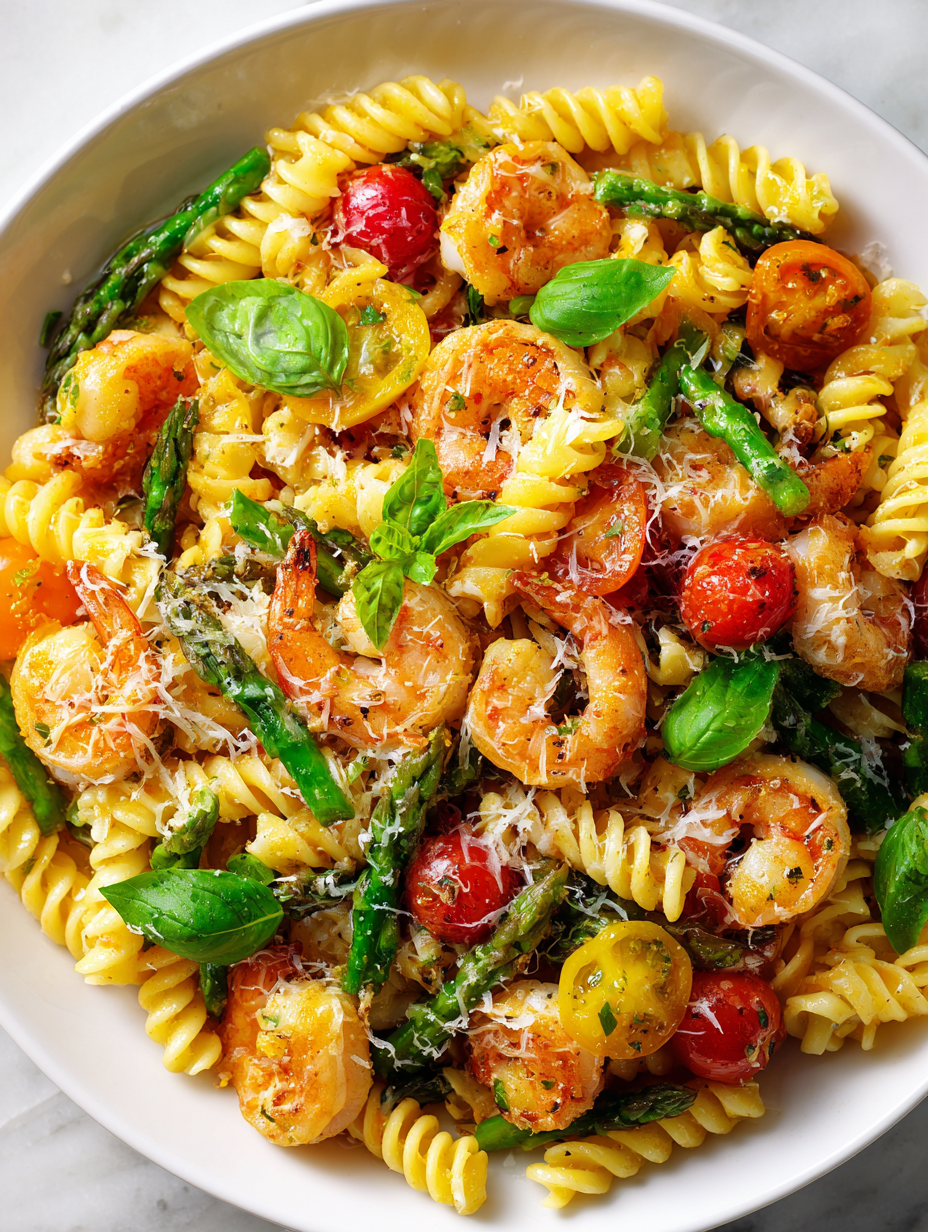
This Shrimp Pasta Primavera is my go-to when I want something bright and satisfying without fuss. I love how the vibrant mix of bell peppers, zucchini, and cherry tomatoes comes together so quickly, especially when fresh produce is bursting this time of year. It’s like capturing a little bit of spring in every bite, even on the busiest nights.
What makes this recipe special isn’t just how it tastes, but how it’s built around simplicity and speed. I’ve learned to keep my ingredients minimal but punchy, letting the sweetness of the shrimp and the freshness of the vegetables shine through. It’s a reminder that you don’t need a long list of ingredients to make a meal feel special, just good timing and a little attention to what’s in season.
Focusing on how the vibrant, garden-fresh vegetables and tender shrimp come together in a quick, one-pan method that captures the essence of spring, making it perfect for busy weeknights when fresh produce is at its peak.
Spring’s Freshest Inspiration
- Cooking this dish always reminds me of spring mornings, when the kitchen fills with the scent of fresh basil and garlic.
- I used to think quick meals lacked soul, but this one proves you can have vibrant, fresh flavors in under 30 minutes.
- There’s a small thrill in tossing the pasta right in the pan with the shrimp and veggies—like a little dance of flavors.
- Sharing this with friends on a busy weeknight feels like a small celebration—simple, colorful, and satisfying.
The story behind this recipe
- This dish came about one hectic spring evening, when I rummaged through my fridge and found a handful of shrimps and a rainbow of vegetables just waiting to be used. I wanted something quick, fresh, and full of flavor—something that captured the lively spirit of spring without demanding hours at the stove.
- I started tossing ingredients in a pan, improvising as I went, and was surprised by how vibrant and satisfying it turned out. It’s become a go-to when I need a meal that feels bright and wholesome but doesn’t require a fancy grocery run or endless prep. It’s basically my celebration of spring’s bounty, on a plate and in under 30 minutes.
- heading: Spring’s Freshest Inspiration
Spring-Inspired Pasta History
- This dish has roots in Italian-American kitchens, where quick, vegetable-forward pasta dishes became a way to celebrate seasonal produce.
- Originally, primavera meant a spring-inspired dish, but over time it evolved into a versatile recipe for any fresh vegetable bounty.
- Shrimp Pasta Primavera gained popularity in the 1980s, coinciding with the rise of health-conscious, veggie-packed meals in American cuisine.
Key Ingredient Insights
- Shrimp: I like mine with a slight bounce, so I don’t overcook. Keep an eye for that pink, opaque look—perfectly tender, not rubbery. Swap for scallops if you want a richer bite.
- Pasta: I prefer spaghetti or linguine here—long and forgiving. Cook until just al dente, then toss right into the pan to soak up all those flavors. Whole wheat works too, for a nuttier touch.
- Bell Peppers: I love the crunch and sweetness they add—use red or yellow for color, or a mix. Sauté just enough to soften but keep their vibrant hue and snap.
- Cherry Tomatoes: They burst with a juicy brightness when heated—no need to cook too long. For a smoky twist, char them lightly in the pan before adding to the dish.
- Garlic & Basil: Fresh is best, especially when garlic turns fragrant and golden—don’t rush this step. Basil should be added at the end to keep its bright, herbal punch.
- Olive Oil & Lemon: Use good, fruity olive oil for richness, and a squeeze of lemon brightens everything up—think zesty, fresh, and just enough to lift the dish.
- Parmesan: Freshly grated adds a salty, nutty layer—don’t skimp. For a dairy-free version, skip or try nutritional yeast for a cheesy hint.
Spotlight on Shrimp and Basil
Shrimp:
- I look for that slight bounce and a pink, opaque color—perfectly tender, not rubbery. Skip overcooking or they turn tough fast.
- Basil: Fresh basil should be aromatic and bright, added at the end to keep its herbal punch lively and vibrant in the dish.
Basil:
- Its fragrant aroma intensifies quickly when chopped, so add right before serving to preserve that fresh burst.
- Shrimp: During cooking, it releases a sweet, briny aroma that signals it’s just about done—don’t let it overcook or lose that tender bite.
Notes for ingredient swaps
- Protein: Shrimp work great here, but scallops or chicken can be swapped in for a different texture and flavor profile. Just adjust cooking time accordingly.
- Pasta: Long, thin varieties like linguine or fettuccine are ideal, but penne or rigatoni hold sauce well if you prefer a chunkier bite.
- Vegetables: Zucchini, asparagus, or snap peas add crunch and freshness—use what’s in season or what you have on hand.
- Olive Oil: Use extra-virgin for a fruity, rich base; avocado oil can be a milder, high-heat alternative with a similar clean flavor.
- Lemon: Fresh lemon juice brightens everything—try lime or even a splash of white wine vinegar if citrus isn’t available.
- Cheese: Parmesan is classic, but Pecorino Romano adds a sharper saltiness; skip dairy altogether and try nutritional yeast for a cheesy note.
- Herbs: Basil is traditional, but parsley, chives, or oregano can add different herbal notes to keep things interesting.
Equipment & Tools
- Large pot: Boil pasta evenly and efficiently.
- Sauté pan: Cook shrimp and vegetables, develop flavor.
- Colander: Drain pasta without breaking it.
- Wooden spoon: Stir ingredients gently and prevent sticking.
Step-by-step guide to Shrimp Pasta Primavera
- Gather all ingredients: shrimp, pasta, vegetables, garlic, basil, olive oil, lemon, Parmesan. Set out a large pot, a sauté pan, a colander, and a wooden spoon.
- Bring a large pot of salted water to a boil (about 100°C / 212°F). Cook pasta until just al dente, about 8 minutes. Drain, reserving a cup of pasta water.
- While pasta cooks, heat a tablespoon of olive oil in the sauté pan over medium heat (about 160°C / 320°F). Add peeled shrimp. Cook for 2-3 minutes per side, until pink and opaque. Remove and set aside.
- In the same pan, add more olive oil if needed. Toss in sliced bell peppers and cherry tomatoes. Sauté until peppers are tender but still vibrant, about 3-4 minutes. Add minced garlic, cook until fragrant, about 30 seconds.
- Return shrimp to the pan. Add cooked pasta, a splash of reserved pasta water, and squeeze of lemon juice. Toss everything together over medium heat (about 150°C / 300°F) for 1-2 minutes, until well combined and heated through.
- Finish with chopped fresh basil and grated Parmesan. Adjust seasoning with salt and pepper if needed. Remove from heat.
- Plate the pasta hot, garnished with extra basil and Parmesan. Serve immediately for the best flavor and texture.
Serve immediately while hot, garnished with extra basil and Parmesan for aroma and visual appeal.
How to Know It’s Done
- Shrimp: pink, opaque, slightly firm to touch.
- Vegetables: bright color, tender but still crisp.
- Pasta: al dente, with a slight bite, and coated with sauce.
Shrimp Pasta Primavera
Ingredients
Equipment
Method
- Bring a large pot of salted water to a rolling boil. Add the pasta and cook until just al dente, about 8 minutes. Drain, reserving a cup of pasta water, and set aside.
- While the pasta cooks, heat 1 tablespoon of olive oil in a sauté pan over medium heat. Add the shrimp and cook for 2-3 minutes per side until they turn pink and opaque. Remove from pan and set aside.
- In the same pan, add another tablespoon of olive oil. Toss in sliced bell peppers and sauté for about 3-4 minutes until they soften but still retain their bright color and crunch. Add the minced garlic and cook for another 30 seconds until fragrant.
- Return the cooked shrimp to the pan, then add the drained pasta. Drizzle with lemon juice and sprinkle in the chopped basil. Toss everything together gently over medium heat for 1-2 minutes, allowing flavors to combine and pasta to soak up the sauce.
- Remove from heat and stir in grated Parmesan cheese. Taste and season with salt and pepper as needed. If the mixture seems dry, add a splash of the reserved pasta water to loosen the sauce.
- Serve immediately, garnished with extra basil and Parmesan for a fresh, vibrant presentation. Enjoy this colorful, spring-inspired pasta dish hot off the stove.
Notes
Pro tips for perfect shrimp pasta primavera
- Bolded mini-head: Use high heat for shrimp—listen for a quick crackle to know when they’re perfectly cooked.
- Bolded mini-head: Sauté vegetables until just tender—overcooking leads to sogginess, aim for vibrant and crisp textures.
- Bolded mini-head: Keep pasta slightly underdone—residual heat will finish cooking it in the pan and absorb flavors.
- Bolded mini-head: Add basil at the very end—this preserves its fresh aroma and bright green color.
- Bolded mini-head: Reserve pasta water—its starchy quality helps create a silky, cohesive sauce.
- Bolded mini-head: Use fragrant olive oil—drizzle just before serving to boost the dish’s richness and aroma.
- Bolded mini-head: Toss ingredients gently—avoid breaking the pasta or crushing vegetables, use a light hand.
Common mistakes and how to fix them
- FORGOT to watch shrimp: overcooked shrimp turn rubbery. Fix by removing from heat promptly.
- DUMPED all pasta water: reserve some for sauce. It adds silkiness and helps sauce cling.
- OVER-TORCHED vegetables: cook just until vibrant and tender. Slightly underdone veggies stay crisp.
- MISSED seasoning balance: taste and adjust salt or lemon at the end for brightness and depth.
Quick Fixes & Pantry Swaps
- When sauce shimmers and clings, it’s ready—don’t let it stick or burn.
- Splash a bit of pasta water if sauce gets too thick or sticky.
- Patch overcooked shrimp with a squeeze of lemon—brightens and masks slight toughness.
- Shield delicate veggies from overcooking by adding them later or cooking briefly.
- If ingredients seem dull, add a pinch of salt or fresh herbs to revive flavor.
Prep, store, and reheat tips
- Prep the vegetables and herbs in advance; store in airtight containers in the fridge for up to 2 days, keeping them crisp and vibrant.
- Cook and drain the pasta ahead of time; refrigerate for up to 24 hours, then reheat briefly in hot water to restore softness.
- Cook the shrimp slightly underdone, then store separately in an airtight container for up to 1 day; finish cooking just before serving for best texture.
- Reheat leftovers in a skillet over medium heat, adding a splash of olive oil or pasta water; watch for bubbling and a fragrant aroma before serving.
- Flavor can mellow over time, so consider adding a squeeze of lemon or fresh basil when reheating to refresh the dish’s brightness.
Top questions about Shrimp Pasta Primavera
1. How do I know when shrimp are done?
Keep the shrimp tender by not overcooking—about 2-3 minutes per side until pink and opaque.
2. When should I add basil to keep it fresh?
Use fresh basil added at the end for maximum aroma and bright flavor, avoiding wilting or browning.
3. How al dente should the pasta be?
Cook pasta until just al dente, about 8 minutes, then toss directly into the pan to absorb flavors.
4. Why should I save pasta water?
Reserve some pasta water before draining; it helps loosen the sauce and makes everything cling better.
5. Can I add a smoky flavor to the dish?
For a smoky flavor, char the cherry tomatoes lightly in the pan before adding other ingredients.
6. What kind of olive oil should I use?
Use a good quality olive oil for richness; it greatly impacts the overall brightness and depth of flavor.
7. Can I substitute the shrimp?
You can swap shrimp for scallops or chicken—just adjust cooking times accordingly to prevent over or undercooking.
8. How do I prevent vegetables from getting soggy?
To keep vegetables crisp, sauté them just until vibrant and tender, about 3-4 minutes, avoiding mushiness.
9. How do I reheat this dish without losing flavor?
Reheat leftovers gently in a skillet with a splash of olive oil or reserved pasta water to restore moisture.
10. What’s the best way to refresh leftovers?
Adding a squeeze of lemon or extra herbs when reheating can brighten the flavors and freshen the dish.
Cooking this Shrimp Pasta Primavera feels like a small act of spring in the middle of a busy week. The burst of fresh vegetables and the tender shrimp bring a brightness that’s hard to beat, especially when you’re craving something wholesome but quick.
It’s a dish I keep coming back to because it balances flavor, speed, and a touch of seasonal joy—no fuss, just good ingredients and a little bit of care. When the kitchen fills with the scent of garlic and basil, I remember why I love cooking in the first place.
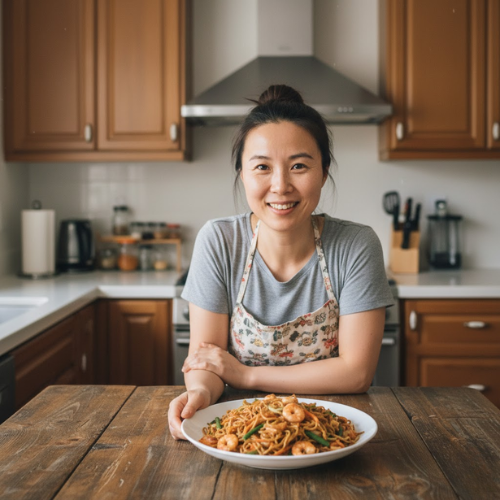
Hi, I’m Jessica Miller, the creator behind Taste Bud Tyrant. Before you get intimidated by the name, let me explain. I am not actually tyrannical. I am just deeply opinionated about flavor. If a dish is bland, I will say it. If a sauce needs acid, I will add it. If something can be bolder, brighter, or better balanced, I will not stop until it is.
